Key Takeaways:
- Not all fish tank heaters are meant to go fully underwater; some may short-circuit, crack, or fail if submerged beyond the manufacturer’s instructions. Always check the manufacturer’s instructions before dropping it in.
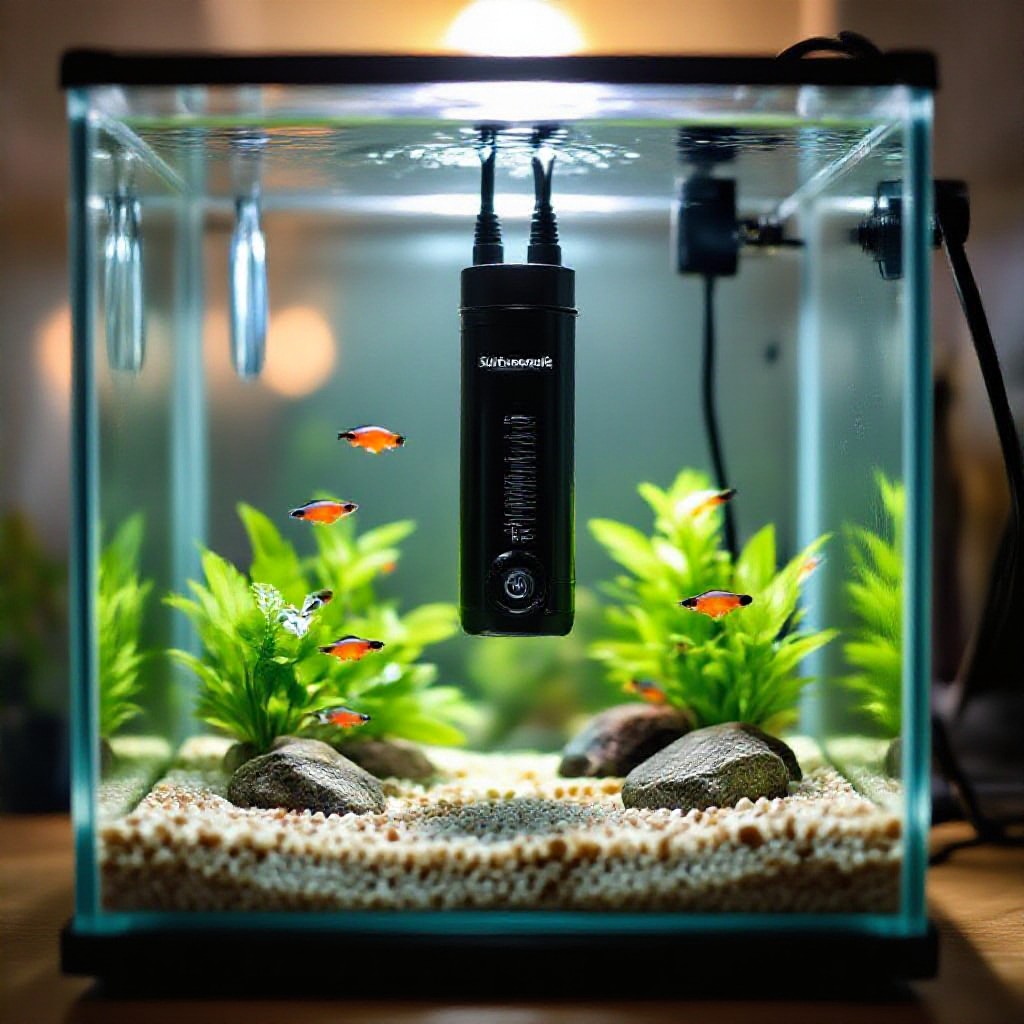
- Submersible heaters exist-and they’re built to handle full immersion. But here’s the catch: even if a heater says “submersible,” you still need to make sure it’s positioned correctly, usually horizontally near the bottom for even heat distribution.
- Water level matters more than you think. If the water drops too low and exposes part of a submersible heater, it can overheat and shatter… and yes, that means glass shards in your tank. Scary, right?
- Some heaters have dry-fire protection-basically a safety switch that shuts them off if they’re not in water. But don’t count on it. Not all models have this, and relying on it is like gambling with your fish’s life.
- Ever seen a heater wrapped in a protective plastic cage? That’s not just for looks. It keeps curious fish (especially cichlids or goldfish) from bumping into the hot surface and burning themselves. Simple fix, big difference.
- Temperature accuracy can go sideways if the heater isn’t fully submerged. The sensor might read air instead of water-and suddenly your tropical fish are freezing while the heater thinks everything’s fine.
- When in doubt, assume the heater needs to stay completely underwater-and keep the tank topped off. Your fish don’t care about technical specs. They just want to stay alive and not swim in a lukewarm soup or an ice bath.
Can you actually dunk the whole thing?
You’ve probably stared at your heater and wondered-can I just sink this whole thing to the bottom and forget about it? The answer depends entirely on what kind of heater you own. Not all heaters are built to be fully submerged, and tossing a non-submersible unit underwater could mean a fried circuit, a cracked glass tube, or worse-electrical danger in your tank. Some models are only meant to sit partially underwater, with a clear water line marking how deep they can go. Go past that, and you’re rolling the dice. But if your heater says “submersible,” you’re golden-drop it all the way down, tuck it behind decor, or lay it flat on the substrate. Just make sure it’s designed for that kind of treatment.What’s the deal with “submersible” labels?
That little word-“submersible”-isn’t just marketing fluff. It means the heater is sealed and tested to survive being completely underwater, no questions asked. Without this label, full submersion may risk short circuits or electrical hazards. So if your heater doesn’t proudly declare it’s submersible, assume it’s not. And don’t be fooled by how it looks-just because it’s glass and metal doesn’t mean it can handle total immersion. Always check the packaging or manufacturer specs. Skipping this step can create avoidable safety risk for the tank and nearby equipment.Why that “minimum water line” is actually important
You might think a few inches above or below doesn’t matter-but it really does. That marked line on your heater? It’s not a suggestion. Going below it can expose internal components to air, causing the glass to crack from uneven heating. That’s not just a broken heater-it’s a potential leak or electrical risk in your aquarium. Water conducts heat away from the glass evenly. Without enough coverage, the top part overheats while the bottom stays cool, creating stress. The result? A sudden pop, water spill, and a dead fish day waiting to happen. So keep your heater fully covered-by at least an inch or two past the minimum line. It’s not overkill. It helps reduce avoidable heater stress and failure risk.My take on why heater safety matters
Ever wonder why a tiny device in your tank can make or break your aquarium’s safety? A faulty heater doesn’t just fail-it can electrocute your fish or even pose a risk to you. Water and electricity are a dangerous combo, and when a heater cracks or malfunctions, the results can be catastrophic. You’re not just protecting fish-you’re safeguarding your home. One cracked glass unit can turn your peaceful hobby into a hazard. That’s why cutting corners on heater quality is a risk not worth taking.Electricity and water: the real nightmare
What happens when electricity leaks into your tank? It’s not just about dead fish-faulty heaters can energize the entire water column, making every touch a potential shock. Your filter, your net, even your hand could become a conductor. And if the heater’s not designed for full submersion? That seal can fail, letting water into the wiring. The result? A short, a spark, or worse. That’s why only fully submersible heaters should ever go underwater-no exceptions.Honestly, why cheap heaters just aren’t worth it
Why gamble with a $10 heater when your whole tank’s at stake? Cheap units often skip on safety features like auto-shutoff or durable quartz shielding. They might work fine… until they don’t. You’ll save a few bucks upfront-then lose every fish when the thermostat sticks and cooks them alive. That “deal” suddenly feels like a disaster. A reliable heater pays for itself in peace of mind. High-quality models use shatter-resistant materials and precise thermostats that won’t drift. They’re tested for continuous submersion, not just slapped together. When your fish depend on stable temps, only a trusted brand should be in the water.Is it better to go fully underwater?
Most modern aquarium heaters are designed to be completely submerged-and doing so often improves performance. You’ll find that full submersion prevents hot spots and ensures even heat distribution across your tank. If your model is rated for full immersion, keeping it underwater is not just safe-it’s smarter. For more insights, check out Everything You Need To Know About Aquarium Heaters.Why I think full submersion helps the flow
Water moves more efficiently around a fully submerged heater, reducing cold zones. Heat rises, yes-but without full coverage, you’re relying on natural convection that might not reach all areas. That means your fish could be swimming in uneven temperatures… and nobody wants that. Stable, consistent warmth starts with proper placement.Why some people still keep the knobs out
Some heater models aren’t built for total immersion-especially older ones. The control knobs and display units on these units can short if flooded. Manufacturers often warn against full submersion for this reason. Putting water where electronics aren’t sealed is a fast track to failure-and possibly a shock risk. So if your heater’s manual says “keep controls above water,” listen. It’s not about preference-it’s about safety. Even a splash inside the housing can ruin the unit or create a hazard. Always check the specs before you sink it.Seriously, don’t skip the drip loop
You’ve probably seen those little downward loops in cords hanging below electrical outlets-maybe even thought they were just for neatness. They’re actually a critical safety feature, especially near water. Without one, moisture can travel down the power cord and straight into your outlet or surge protector. That’s not just risky-it’s a potential shock or fire hazard waiting to happen. So why does this matter so much for your aquarium setup? Water is sneaky. It doesn’t take a flood-just a splash or condensation buildup over time. The drip loop stops that moisture in its tracks by creating a low point where water can drip off instead of creeping toward electricity. No drip loop? You’re gambling with your safety-and your home.The drip loop: a total life-saver
Think of the drip loop like a seatbelt for your fish tank’s electrical gear. It’s simple, it’s free, and it can prevent disaster. When installed correctly, it forces any water running down the cord to fall away before reaching the plug. This tiny bend in the wire could literally save your life-or at least keep your living room from turning into a smoky mess. And honestly, it takes less than a minute to set up. Just make sure the lowest point of the cord is below both the outlet and the tank’s rim. No tools, no cost-just peace of mind. Skip it? That’s like driving without buckling up… except the crash might take out your whole house.What happens if things get a bit splashy?
Splash happens-literally. A jumping fish, an overenthusiastic filter, or even just topping off the tank can send water flying. Without a drip loop, that splash can wick its way down the heater’s cord. Once electricity and water meet outside the tank, you’re in danger zone. You might not see it right away. But over time, dampness creeping into outlets can corrode connections or short-circuit power strips. And here’s the scary part: it might not trip the breaker until it’s too late. Water doesn’t need a river to cause harm-just a thin film along a cord is enough to conduct electricity. If that path leads to an outlet or power strip near your tank, you’re risking electrocution or fire. Even small, repeated splashes add up. That’s why positioning matters: keep cords angled down first, then up to the outlet. This way, gravity works for you-not against you.Picking the right spot in your tank
Where you place your heater isn’t just about convenience-it can make or break your fish’s safety. You want even heat distribution, but more than that, you need to avoid creating hazards. Poor placement can lead to cracked glass, overheated zones, or even burns on curious fish. Think about water flow and accessibility when choosing your spot. Positioning matters just as much as submersion depth. Most heaters work best near a filter inlet or powerhead, where water movement helps spread warmth evenly. And never just drop it in the corner and forget it-check that it’s not touching anything it shouldn’t. A few inches of clearance can prevent a disaster.Why placement is honestly everything
Did you know a heater pressed against the glass can actually crack your tank? Thermal stress builds up when one spot gets way hotter than the rest, and boom-leak city. Keeping your heater vertical and suspended in the water column reduces that risk dramatically. Always follow the manufacturer’s clearance guidelines-they’re not just suggestions. And think about your fish’s behavior. Some species love to investigate new objects, and a poorly placed heater becomes a hazard waiting to happen. If your cichlid likes to dig or your catfish enjoys rubbing against surfaces, you’ve got to plan accordingly. A well-placed heater stays out of high-traffic zones while still doing its job efficiently.Keeping it clear of the sand and glass
Ever seen a heater buried under substrate? That’s a one-way ticket to malfunction town. When sand or gravel packs around the unit, heat can’t escape properly-leading to dangerous overheating or total failure. Always mount your heater above the tank floor, especially in setups with deep bedding. Most models are designed to hang vertically from the rim or attach via suction cups-use those features. Letting it rest on the glass bottom might seem easier, but it’s a shortcut with real consequences. Keep at least an inch of space between the heater and any surface, period. Here’s the thing-many aquarium heaters have temperature sensors near the bottom third of the unit. If that part gets insulated by sand, it reads falsely low and keeps pumping out heat, thinking the water’s cold. That means your tank could be cooking without you realizing it. This kind of silent overheating has wiped out entire communities in home aquariums. So yeah, keeping it elevated isn’t fussy-it’s vital.Keeping your fish from getting cooked
You’ve set up your tank, added the heater, and assumed it’s doing its job-until you notice your fish darting erratically near the surface. That’s your first red flag. Overheating is silent but deadly, and it can happen fast if your heater malfunctions. Even fully submersible models can fail and keep heating nonstop, turning your aquarium into a slow cooker. Always double-check the actual water temperature with a separate, reliable thermometer-don’t just trust the heater’s built-in settings. A difference of just a few degrees can stress or kill sensitive species. And if your fish are gasping or hiding more than usual, don’t wait-test the temp immediately.Why I never trust the dial’s word
Your heater’s temperature dial might look precise, but it’s often more of a suggestion than a guarantee. I learned this the hard way when my guppies started acting sluggish-turned out the water was nearly 88°F despite the dial being set to 78. These dials are notoriously inaccurate, especially on budget models. That’s why I always use an independent digital thermometer mounted inside the tank. It gives me real-time feedback, not a guess. Never rely solely on the heater’s settings-your fish’s health depends on actual water conditions, not what the dial says.Signs your heater’s about to kick the bucket
Cracks in the glass or cloudy water around the heater are dead giveaways something’s wrong. If you see fog inside the unit, it’s already compromised. Water’s gotten in, and that means electrical danger is just around the corner. Unplug it immediately. Another warning? Your tank’s temperature swings wildly overnight. One morning it’s perfect, the next it’s too hot or too cold. That’s not your fish being dramatic-it’s your heater failing. Consistency is key, and inconsistency means trouble. When a heater starts acting up, it doesn’t always shut off-it might just keep heating. That’s the worst-case scenario. You wake up to a tank that feels warm to the touch and fish lying motionless. A faulty heater can become a death trap overnight. Regular visual checks and temperature monitoring aren’t overkill-they’re basic care. Replace any unit showing wear before it becomes a hazard.FAQ
Q: Are all fish tank heaters designed to be fully submerged underwater?
A: Nope, not all heaters are built the same. Some older or cheaper models are only meant to be partially submerged, with a water line marked clearly on the glass or plastic casing. If you dunk those completely, water can seep into the electronics and short them out – or worse, cause an electrical hazard. Always check the manufacturer’s label before dropping it in. If it says “submersible,” you’re good to go underwater. If it just says “immersion heater,” that might mean partial only. When in doubt, read the manual – or better yet, assume it’s not safe until confirmed.Q: Can a submersible heater be safely used above the water line?
A: Absolutely not. Running a submersible heater outside of water is a fast track to burning it out – or starting a fire. These heaters rely on water to dissipate heat. Without that cooling effect, the internal elements overheat in seconds. You’ll smell it before you see it – that sharp, plasticky burning odor. And once that happens, the heater’s toast. Even worse, if it’s near flammable materials or left unattended, it could ignite something nearby. So keep it under – always. – Never operate a submersible heater dry. – Water is its cooling system. No water = rapid overheating.Q: How can I tell if my heater is fully submersible?
Most modern aquarium heaters made in the last 15 years are fully submersible – but don’t take that for granted. Look for the word “submersible” printed on the device itself, usually near the power cord base. Some brands use a little icon – a fish underwater or a wave symbol. If it’s missing that label, check the packaging or the manufacturer’s website. I once grabbed a spare heater from the back of a closet, assumed it was safe, and nearly fried my tank’s electronics. Lesson learned: always verify. And hey – if the instructions say “do not submerge beyond this line,” that’s your hard limit. No guessing, no testing fate.Q: What happens if a non-submersible heater gets fully wet?
Water sneaks in where it shouldn’t. That’s the problem. Non-submersible heaters have seals and vents meant to stay above water. When submerged, moisture creeps into the electrical components. At first, you might not notice – the heater still clicks on. But over time, corrosion builds up inside. Then one day, it shorts out. You’ll hear a pop, see a flicker, or smell something off. In worst cases, it can electrify the whole tank. Imagine your hand in the water when that happens… not good. That’s why it’s not just about whether it works – it’s about whether it’s safe long-term.Q: Do submersible heaters need to be placed horizontally or vertically?
Most can work either way – but check your model. Some heaters perform better when mounted vertically, especially if they have a built-in thermostat that relies on heat rising naturally through the unit. Others, like those with adjustable suction cups, are designed to lie flat on the gravel. I’ve seen heaters clogged with debris because they were placed flat in a sandy tank – the intake got buried. Not ideal. Pro tip: position it near the filter output. That way, water circulates evenly, and the thermostat reads a more accurate average temperature instead of just the hot spot right next to the heater.Q: Can a cracked submersible heater still be used if it’s still heating?
Nope. Don’t even think about it. A crack means water’s getting inside – even if it’s not visible yet. That moisture will eventually reach the heating element or wiring. Once that happens, you’re risking electric shock to your fish – or worse, to you when you reach in to clean the tank. I’ve seen a heater look fine on the outside but fizz and spark when unplugged – that’s a silent danger. If the glass or casing is compromised, unplug it immediately and replace it. No exceptions. – A working heater with a crack is a ticking time bomb. – Your fish – and your safety – aren’t worth the few bucks to replace it.Q: Are there safer alternatives to traditional glass submersible heaters?
Yeah, there are. Titanium heaters are tough as nails – corrosion-resistant, shatterproof, and fully submersible. They cost more upfrontRelated aquarium guides
Read next: For tank-capacity and room-temperature factors, see What Size Fish Tank Heater Do I Need?.
Frequently Asked Questions
How can I tell whether my heater is fully submersible?
Check the product manual and the markings for that exact model. Do not assume every aquarium heater can be submerged to the same level or used in the same orientation.
Where should an aquarium heater be placed?
Follow the manual for your heater model. Many manufacturers recommend an area with water circulation so heat can distribute more evenly, plus a separate thermometer away from the heater to check tank temperature.