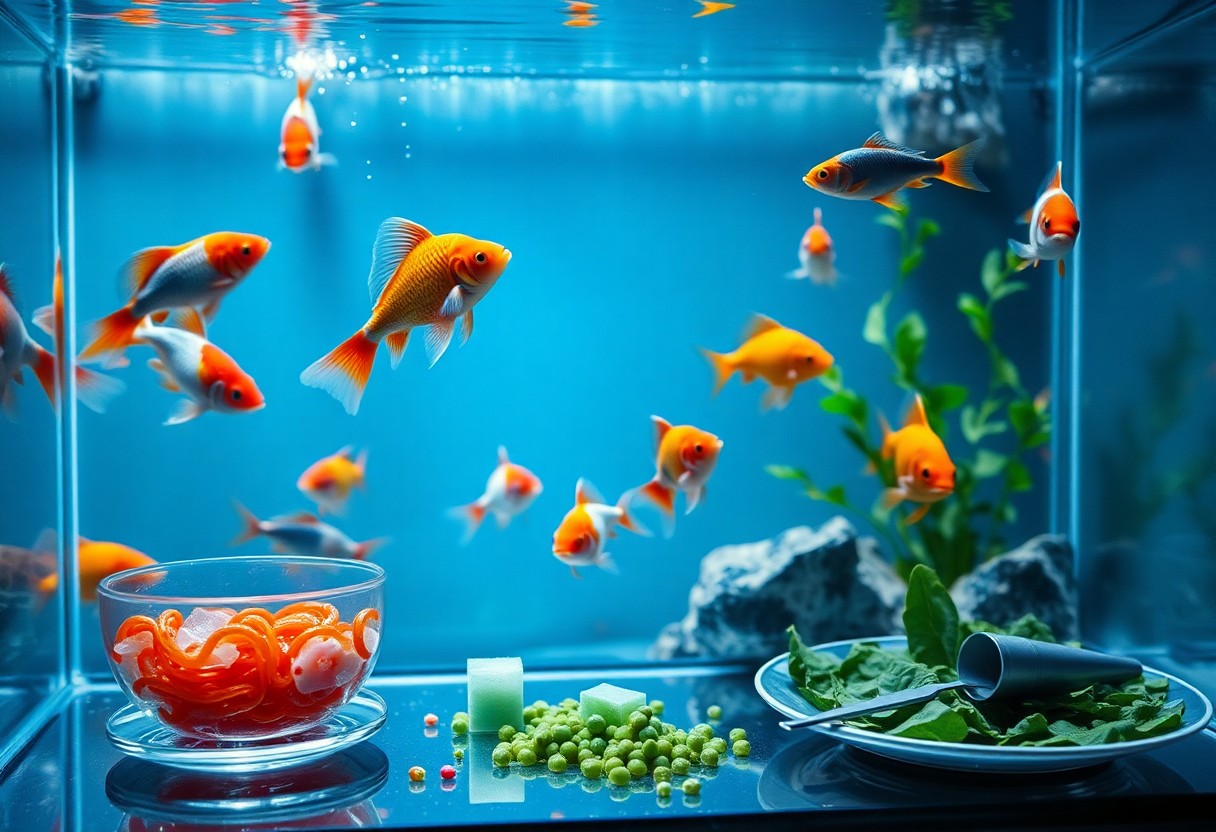
Nutrition directly impacts your fish’s health, growth, and coloration. Live and frozen foods like brine shrimp and daphnia boost vitality, while overreliance on low-quality pellets can lead to stunted growth. Adding spirulina, krill, and vegetable matter enhances natural pigmentation. You can optimize results by varying diets based on species-specific needs.
Key Takeaways:
- Fish thrive when their diet includes natural foods like brine shrimp, daphnia, and bloodworms, which enhance both growth and coloration.
- Carotenoid-rich ingredients such as spirulina and krill help intensify reds, oranges, and yellows in fish pigmentation.
- Live and frozen foods stimulate natural feeding behaviors, leading to better digestion and overall health.
- Overreliance on generic pellets can result in nutrient gaps; supplementing with varied food sources supports balanced nutrition.
- Matching food types to a fish’s natural diet-whether herbivore, carnivore, or omnivore-produces the best results in growth and vibrancy.
The Vitality of Live Prey
You unlock a powerful boost in fish health when you introduce live prey into their diet. Live foods like brine shrimp and daphnia trigger natural hunting behaviors, increasing activity and muscle development. These organisms are rich in imperative fatty acids and pigments that enhance coloration. Overfeeding live prey can pollute water, so moderation is key. Your fish gain not just nutrition, but mental stimulation from chasing real food.
Pigments from the Deep
You’re feeding your fish quality food, but true vibrancy comes from rare pigments found in deep-sea organisms. Carotenoids like astaxanthin from krill and spirulina trigger intense reds and blues in scales. These compounds aren’t just color enhancers-they support immune function and reproductive health. Ignoring them means missing a key growth and color catalyst hidden in ocean depths.
Greens for the Grazers
You can boost your fish’s digestion and color by offering fresh greens like spinach, zucchini, and lettuce. These vegetables provide vital fiber and nutrients that support gut health and enhance natural pigmentation. Always blanch tougher greens first to aid consumption. Uneaten portions must be removed within a few hours to prevent water quality issues.
The Cold Storage Bounty
You’ve likely overlooked the freezer section as a source of nutrition for your fish, but it holds powerful, color-enhancing foods like frozen brine shrimp and bloodworms. These retain more natural nutrients than processed pellets and stimulate active feeding. Thaw portions before serving to avoid temperature shock and prevent digestive issues. Regular use boosts vitality and deepens pigmentation over time.
Foraging as Nature Intended
You unlock your fish’s natural feeding instincts when you encourage foraging behavior. Wild fish spend hours searching for food, and replicating this in captivity boosts mental stimulation and physical activity. Scatter small portions of food across the tank so your fish must work to find it. This simple change mimics natural feeding patterns and can lead to healthier digestion and improved coloration.
Summing up
Following this exploration, you see that fish thrive on diverse diets beyond pellets. Incorporating fresh vegetables, live foods, and color-enhancing supplements supports better growth and vivid pigmentation. Your choices directly influence health and appearance, making varied, nutrient-rich options a smart, effective approach to fish care.
FAQ
Q: What types of natural foods can improve a fish’s color?
A: Certain natural foods enhance fish color by providing pigments like carotenoids. Brine shrimp, especially when enriched with spirulina or astaxanthin, intensify reds and oranges. Fresh or blanched vegetables such as carrots and spinach contain beta-carotene, which supports yellow and green hues. Krill and daphnia also contribute to vibrant coloring due to their natural pigment content. Feeding these foods regularly can lead to more vivid and natural-looking fish over time.
Q: Can live food help fish grow faster than pellets alone?
A: Yes, live food often boosts growth because it closely mimics what fish eat in the wild. Foods like blackworms, grindal worms, and baby brine shrimp are rich in protein and imperative fatty acids. These nutrients support muscle development and metabolic efficiency. Fish that consume live food tend to show increased activity, better appetite, and faster weight gain compared to those fed only processed pellets.
Q: Are vegetables safe for fish, and which ones should I feed?
A: Many fish, especially herbivores and omnivores, benefit from vegetables. Zucchini, cucumber, peas, and spinach are safe when blanched first to soften them. These provide fiber and vitamins that aid digestion and immune function. Remove uneaten portions after a few hours to prevent water quality issues. Some cichlids, plecos, and goldfish especially enjoy plant-based foods as part of a balanced diet.
Q: How often should I feed my fish foods other than pellets?
A: Varying the diet 2-3 times per week with alternatives like frozen, live, or fresh foods provides balanced nutrition. Daily feeding of only pellets can lead to nutrient gaps. For best results, alternate between high-quality pellets and supplements such as bloodworms, daphnia, or spirulina flakes. This variety supports long-term health, growth, and coloration without overloading the tank with waste.
Q: Can feeding color-enhancing foods harm my fish if overused?
A: Overuse of color-enhancing foods, especially those high in pigments like astaxanthin, is generally safe but can lead to digestive strain if they replace balanced nutrition. Relying too heavily on fatty foods like beef heart or excessive bloodworms may cause liver stress or poor water quality. Moderation is key-use color-enhancing foods as supplements, not the sole diet, and maintain variety for optimal health.
Q: What frozen foods are best for tropical fish growth?
A: Frozen brine shrimp, mysis shrimp, and bloodworms are excellent for tropical fish. Mysis shrimp offer high protein and calcium, supporting bone and scale development. Bloodworms are protein-rich and stimulate feeding response, but should be fed in moderation due to high fat content. Combining these with vegetable-based frozen mixes ensures a well-rounded diet that promotes steady, healthy growth.
Q: Do different fish species need different types of food?
A: Yes, dietary needs vary widely by species. Carnivorous fish like bettas thrive on protein-rich foods such as daphnia and bloodworms. Herbivorous fish such as silver dollars require algae-based flakes and fresh vegetables. Omnivores like guppies do well with a mix of both. Matching food types to a fish’s natural feeding behavior improves digestion, energy levels, and overall vitality. Always research your specific fish’s diet for best results.