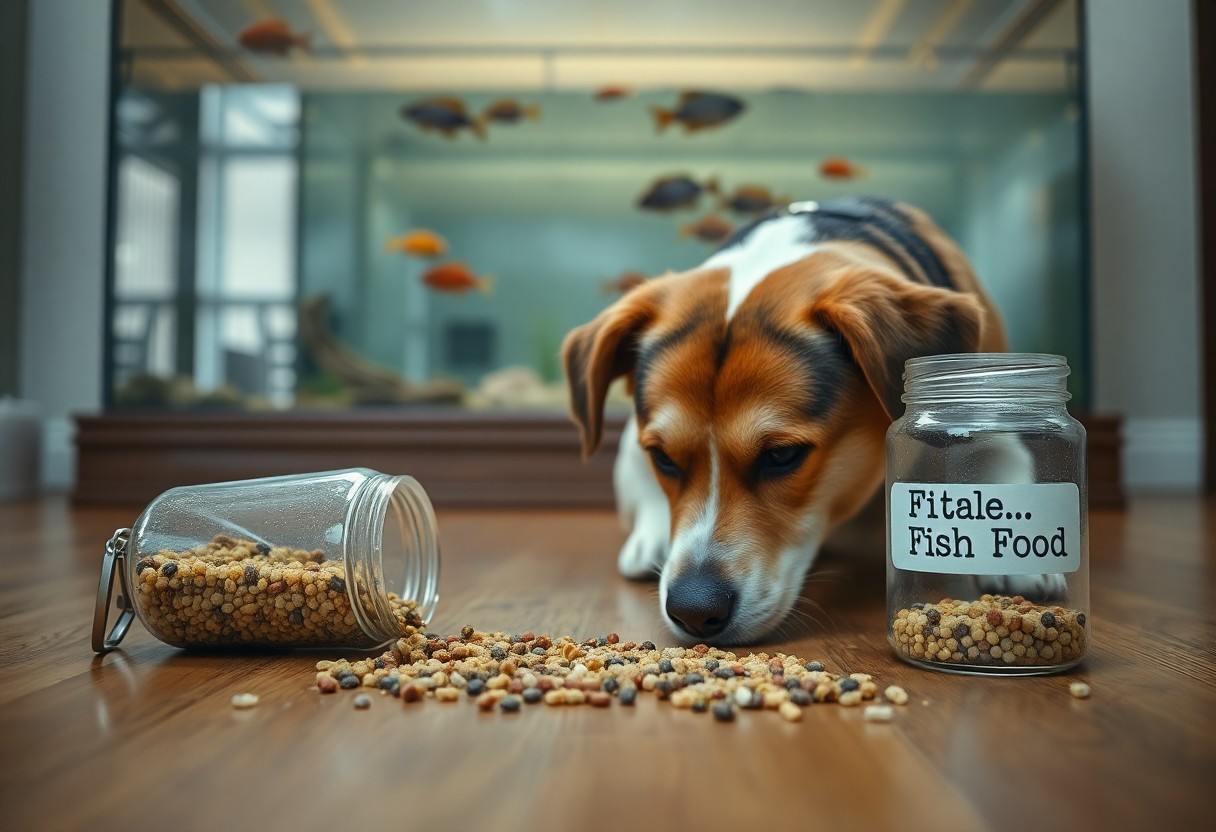
You may not realize that the fish food in your aquarium could pose a serious risk to your dog. Some fish foods contain ingredients toxic to dogs, especially if consumed in large amounts. While small nibbles are often harmless, ingesting a full container can lead to vomiting, diarrhea, or worse. Always store fish food out of your pet’s reach.
Key Takeaways:
- Fish food is not designed for dogs and may cause mild gastrointestinal upset if ingested in small amounts.
- Most commercial fish foods contain ingredients like fish meal, grains, and vitamins that are not toxic but can lead to vomiting or diarrhea in dogs.
- Larger quantities of fish food, especially those with added supplements or preservatives, may pose a higher risk of digestive issues or nutrient imbalances.
- Dogs that frequently eat fish food might develop pancreatitis due to the high fat content in some formulations.
- Keep fish food stored securely out of your dog’s reach to prevent accidental ingestion and monitor your pet for symptoms if exposure occurs.
The Canine Hunger
Dogs follow their instincts, and hunger drives them to explore anything edible. Your pup might see fish food as a snack, not understanding the risk. These pellets often contain concentrated nutrients meant for aquatic life, not canine digestion. Ingesting them can lead to stomach upset or more serious health issues, especially in small breeds.
The Scent of the Sea
That fishy aroma wafting from the aquarium draws your dog in. The smell of fish food is strong and appealing, mimicking real seafood. Your dog doesn’t know it’s processed for fish-it only knows it smells like food. This natural attraction increases the chance of accidental consumption, especially in curious or food-motivated dogs.
The Quick Theft
A split second is all it takes for your dog to snatch a handful of fish food. While you’re distracted, your pet might paw at the container or leap onto the tank ledge. These foods are not formulated for dogs and can cause immediate digestive distress. Prevention starts with secure storage and supervision.
Once your dog accesses fish food, the damage can happen fast. The high protein and oil content may trigger vomiting, diarrhea, or even pancreatitis in sensitive dogs. Some formulations include ethoxyquin or other preservatives that are toxic when ingested by mammals. Even small amounts aren’t worth the risk-keep containers locked away and clean spills immediately to protect your pet’s health.
The Poison in the Jar
You might not suspect a small jar of fish food could pose a serious threat, but many formulations contain ingredients that are toxic to dogs. Even a minor ingestion can lead to gastrointestinal distress or worse, depending on the components. Your dog’s curiosity doesn’t discriminate-what’s safe for fish isn’t safe for canines.
Preservatives for Fish
Preservatives like ethoxyquin are commonly added to fish food to extend shelf life, but they can be harmful if your dog consumes them. These chemicals may cause liver damage or allergic reactions in sensitive animals. You should always check labels and keep such products out of paw’s reach.
Salt and Heavy Metals
Salt levels in fish food are often much higher than what your dog should consume. Heavy metals like mercury or lead, sometimes present due to poor sourcing, can accumulate in your pet’s system over time. Both pose serious long-term health risks with repeated exposure.
Repeated exposure to elevated salt levels can lead to sodium ion poisoning, which causes vomiting, diarrhea, and even seizures. Heavy metals, even in trace amounts, build up in organs and may result in neurological symptoms or kidney damage. You’re responsible for recognizing that even small, frequent exposures can be dangerous over time.
The Sick Dog
You may not realize your dog is unwell until symptoms appear hours after eating fish food. Most commercial fish foods contain ingredients that can upset your dog’s digestive system. Some formulations include ethoxyquin or other preservatives that are toxic in large amounts. Watch closely if your pet shows any unusual behavior after exposure.
Signs of Pain
Your dog might whimper, avoid movement, or guard their abdomen if in pain. Visible discomfort after ingesting fish food could signal gastrointestinal irritation or worse. These behaviors are not normal and require immediate attention. Never dismiss them as minor issues.
The Thirst
Your dog may start drinking excessively after consuming fish food. Increased thirst can indicate the body trying to flush out harmful substances. This symptom often appears alongside vomiting or lethargy. Pay close attention if water bowl visits become constant.
Excessive drinking isn’t just about hydration-it’s often the body’s emergency response. Fish food contains high levels of certain minerals and salts that can disrupt your dog’s electrolyte balance. When sodium or phosphorus levels spike, the kidneys work harder, triggering relentless thirst. If this continues beyond a few hours, contact your vet without delay.
The Doctor of Animals
Your veterinarian knows how to handle pet emergencies with precision. If your dog eats fish food, contact them immediately-they’ll assess risk based on ingredients and quantity. Quick action can prevent serious complications, especially if the food contains preservatives or oils harmful to dogs. Trust their expertise to guide the next steps.
The Phone Call
You describe the incident calmly, noting the brand and amount of fish food consumed. The vet listens closely and advises whether to monitor at home or come in. Immediate guidance helps ease anxiety and ensures your dog gets the right care without delay.
The Recovery
Most dogs recover quickly with proper care. Your vet may recommend fluids or a bland diet to soothe the stomach. Watch for vomiting or lethargy, which could signal a more serious reaction. Staying alert speeds up recovery and keeps your pet safe.
Recovery often depends on how fast you respond. If the fish food contained ethoxyquin or high levels of fats, your dog might need supportive treatment like anti-nausea medication or observation. Early intervention typically leads to full recovery within 24 to 48 hours. Always follow your vet’s instructions closely to ensure a smooth return to normal health.
To wrap up
The safety of your dog depends on understanding household risks, and fish food is no exception. You now know it can be toxic due to ingredients not meant for canine digestion. Keep fish food secured and out of reach. Your awareness prevents accidental ingestion and protects your pet’s health effectively.
FAQ
Q: Is fish food toxic to dogs?
A: Most fish food is not highly toxic to dogs, but it can cause digestive upset if eaten in large amounts. Fish food often contains oils, proteins, and preservatives meant for aquatic animals, not mammals. When a dog eats fish food, it may experience vomiting, diarrhea, or stomach discomfort. The risk increases if the food includes additives like copper sulfate or ethoxyquin, which can be harmful in high doses.
Q: What should I do if my dog ate fish food?
A: Watch your dog closely for signs of illness such as vomiting, diarrhea, drooling, or lack of energy. If your dog only ate a small amount, it will likely be fine with no treatment. Offer fresh water and keep their diet bland for the next 24 hours. Contact your veterinarian if symptoms persist or worsen, especially if the fish food contained chemicals or if your dog consumed a large quantity.
Q: Can fish food cause long-term health problems in dogs?
A: Occasional ingestion of small amounts of fish food is unlikely to cause lasting harm. Repeated exposure or eating large quantities may lead to liver or kidney stress due to preservatives and mineral content. Some fish foods contain high levels of copper or other elements that dogs process differently than fish. Chronic consumption could contribute to organ damage over time, so it’s best to prevent access altogether.
Q: Are certain types of fish food more dangerous than others?
A: Yes. Pellets or flakes designed for tropical fish may contain color enhancers or medications not safe for dogs. Freeze-dried or live food supplements sometimes include garlic or other ingredients toxic to dogs. Fish food labeled for specific species, like cichlids or marine fish, often has concentrated nutrients that can be harmful in excess. Always check the ingredient list if your dog has eaten a significant amount.
Q: How can I tell if my dog is having a bad reaction to fish food?
A: Look for vomiting, loose stools, excessive thirst, lethargy, or loss of appetite within a few hours of ingestion. Some dogs may drool more than usual or show signs of abdominal pain, like whining or hunching. In rare cases, tremors or difficulty breathing can occur, especially if the food contained toxic additives. Seek veterinary care immediately if severe symptoms appear.
Q: Can fish food attract dogs to eat other dangerous items?
A: Yes. Fish food often has a strong, fishy smell that dogs find appealing. A dog that learns to raid the fish food container may also chew on aquarium equipment, ingest water with chemicals, or eat decorative stones. These behaviors increase the risk of poisoning, intestinal blockage, or electrical injury from filters and pumps. Store all aquarium supplies out of reach.
Q: How can I prevent my dog from eating fish food?
A: Keep fish food in a sealed, dog-proof container stored in a closed cabinet. Feed fish in a room your dog doesn’t enter, or use a cover on the aquarium. Train your dog basic commands like “leave it” to discourage interest in off-limits items. Supervise interactions near the fish tank, especially if your dog is curious or food-motivated.