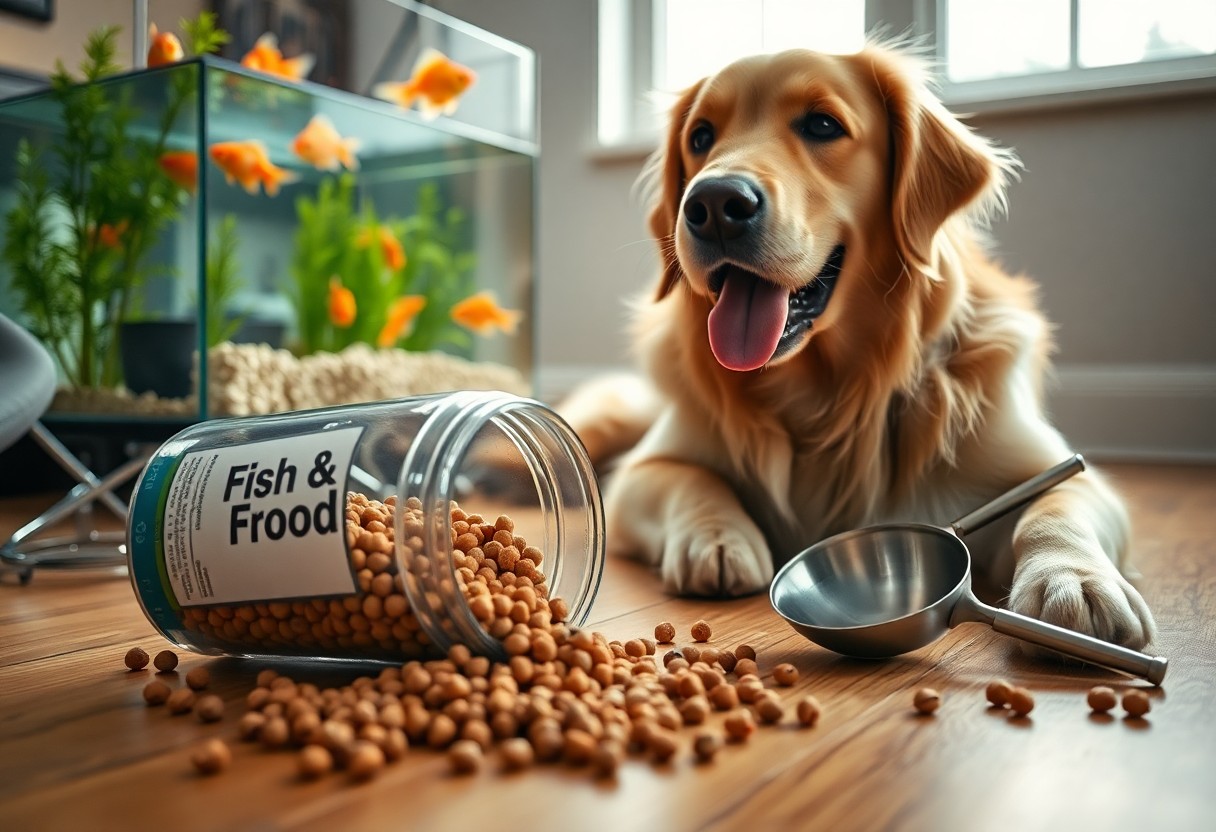
Many dog owners have caught their pet snacking on fish food, and while occasional nibbles are usually low concern for many healthy dogs, some ingredients or mineral levels may be harmful in larger amounts. You should monitor for vomiting or diarrhea, and know that small, infrequent amounts typically don’t harm healthy dogs.
Key Takeaways:
- Small amounts of fish food are often low concern for healthy dogs, but it is not formulated for canine digestion and should not be a regular part of their diet.
- Dogs that eat fish food accidentally may experience mild stomach upset, such as vomiting or diarrhea, due to the different nutrient composition.
- Some fish foods contain ingredients like copper sulfate or ethoxyquin, which can be harmful to dogs if consumed in large quantities.
- Keep fish food out of reach of pets, as repeated access could lead to more serious health issues over time.
- If a dog eats a large amount of fish food or shows signs of illness, contact a veterinarian for guidance.
The Canine Gourmet
You might think your dog’s curiosity about fish food is just a quirky snack habit, but some ingredients in fish food can be harmful to dogs. While a small nibble likely won’t cause harm, repeated or large ingestions may lead to gastrointestinal upset or worse. Copper and certain preservatives commonly found in fish flakes are not formulated for canine digestion. Your dog’s system processes food differently than a fish’s-what’s nutritious for one can be dangerous for the other.
Ingredients of the Deep
What’s Really in Fish Food?
You might be surprised to learn that fish food often contains antibiotics and copper sulfate, substances not meant for canine digestion. While small amounts may not trigger immediate harm, repeated exposure may increase the risk of gastrointestinal upset or nutrient imbalance. Your dog doesn’t need these additives, and even trace levels can build up over time.
Immediate Consequences
You might notice your dog drooling or pawing at their mouth right after eating fish food. Some brands contain preservatives or oils that irritate the stomach, leading to vomiting or diarrhea within hours. Most cases are mild, but if your dog consumed a large amount, pancreatitis or intestinal blockage becomes a real risk. Watch closely for lethargy or trouble breathing-these signal the need for urgent care.
Long Term Hazards
You might not see immediate effects if your dog eats fish food now and then, but repeated exposure can lead to serious health issues. Over time, the high protein and fat levels in fish food may strain your dog’s liver and kidneys. Phosphorus and copper concentrations, safe for fish, may become a concern for dogs if consumed repeatedly or in large amounts. Chronic consumption increases the risk of organ damage, especially in smaller breeds or dogs with preexisting conditions.
Actionable Steps
If your dog eats fish food, watch for vomiting, diarrhea, or lethargy-these could signal a problem. Contact your vet immediately if symptoms appear or if a large amount was consumed. Do not induce vomiting unless instructed by a professional. Keep fish food stored securely out of reach to prevent future incidents. Your quick response makes all the difference.
Prevention Tactics
You can stop accidents before they happen by placing your fish tank in a location your dog can’t easily access. Use a secure, locking lid on the aquarium to block curious paws. Store fish food in cabinets dogs can’t reach, and never leave food out after feeding your fish. Training your dog to obey “leave it” commands adds another layer of protection. Consistency keeps everyone safe.
To wrap up
You now know that while fish food isn’t toxic to dogs in small amounts, it’s not meant for their digestive systems. Occasional nibbles likely won’t harm your pet, but regular consumption can lead to stomach upset or nutrient imbalances. Stick to dog-specific foods to keep your companion healthy and avoid unnecessary risks from aquarium snacks.
FAQ
Q: Is fish food toxic to dogs if they eat it accidentally?
A: Most fish food is not toxic to dogs in small amounts. It’s typically made from fish meal, grains, and vitamins, which aren’t poisonous. However, the ingredients aren’t formulated for canine digestion. If a dog eats a small pinch, it’s unlikely to cause harm. Larger quantities may lead to stomach upset, but serious toxicity is rare.
Q: What symptoms should I watch for if my dog eats fish food?
A: Dogs may show signs like vomiting, diarrhea, or mild stomach discomfort after eating fish food. These symptoms usually appear within a few hours. In rare cases, if the food contains copper sulfate or other additives used in aquarium treatments, more serious symptoms like lethargy or loss of appetite could occur. Monitor your dog closely and contact a vet if symptoms worsen.
Q: Can eating fish food cause long-term health problems in dogs?
A: Occasional ingestion of fish food is unlikely to cause lasting harm. The real concern comes from repeated exposure or large amounts. Fish food lacks the balanced nutrition dogs need and may contain high levels of certain minerals. Over time, this could disrupt nutrient balance, but one-time incidents don’t pose a long-term risk.
Q: How much fish food is dangerous for a dog to consume?
A: There’s no exact toxic dose, but small amounts-like a spoonful or less-are generally safe. Problems are more likely when a dog eats a full scoop or more, especially if it’s a smaller breed. The risk increases with the presence of preservatives or algaecides in the food. When in doubt, call your veterinarian for guidance based on your dog’s size and the amount consumed.
Q: Should I induce vomiting if my dog eats fish food?
A: Do not induce vomiting unless directed by a veterinarian. Some substances can cause more harm coming back up, especially if they irritate the esophagus. If your dog ate fish food recently and seems fine, watch for symptoms instead. Contact your vet to determine the best course of action based on the ingredients and quantity ingested.
Q: Are certain types of fish food more dangerous than others?
A: Yes, some fish foods contain additives like copper-based algaecides or medications for sick fish, which can be harmful to dogs. Color-enhancing flakes or medicated pellets pose a higher risk than basic tropical fish food. Always check the label if possible. Medicinal or specialty fish food should be kept well out of reach of pets.
Q: How can I prevent my dog from eating fish food in the future?
A: Store fish food in a sealed container inside a closed cabinet or high shelf. Avoid feeding fish near your dog, and supervise interactions with aquariums. Training your dog basic commands like “leave it” can also help prevent accidental ingestion. Making the area around the tank off-limits reduces temptation and risk.