There is no single scoop size that suits every aquarium fish. A useful feeding routine starts with a small amount, watches how the fish respond, and adjusts for the species, life stage, food type, tank conditions, and leftovers.
Quick answer: start small and watch the aquarium
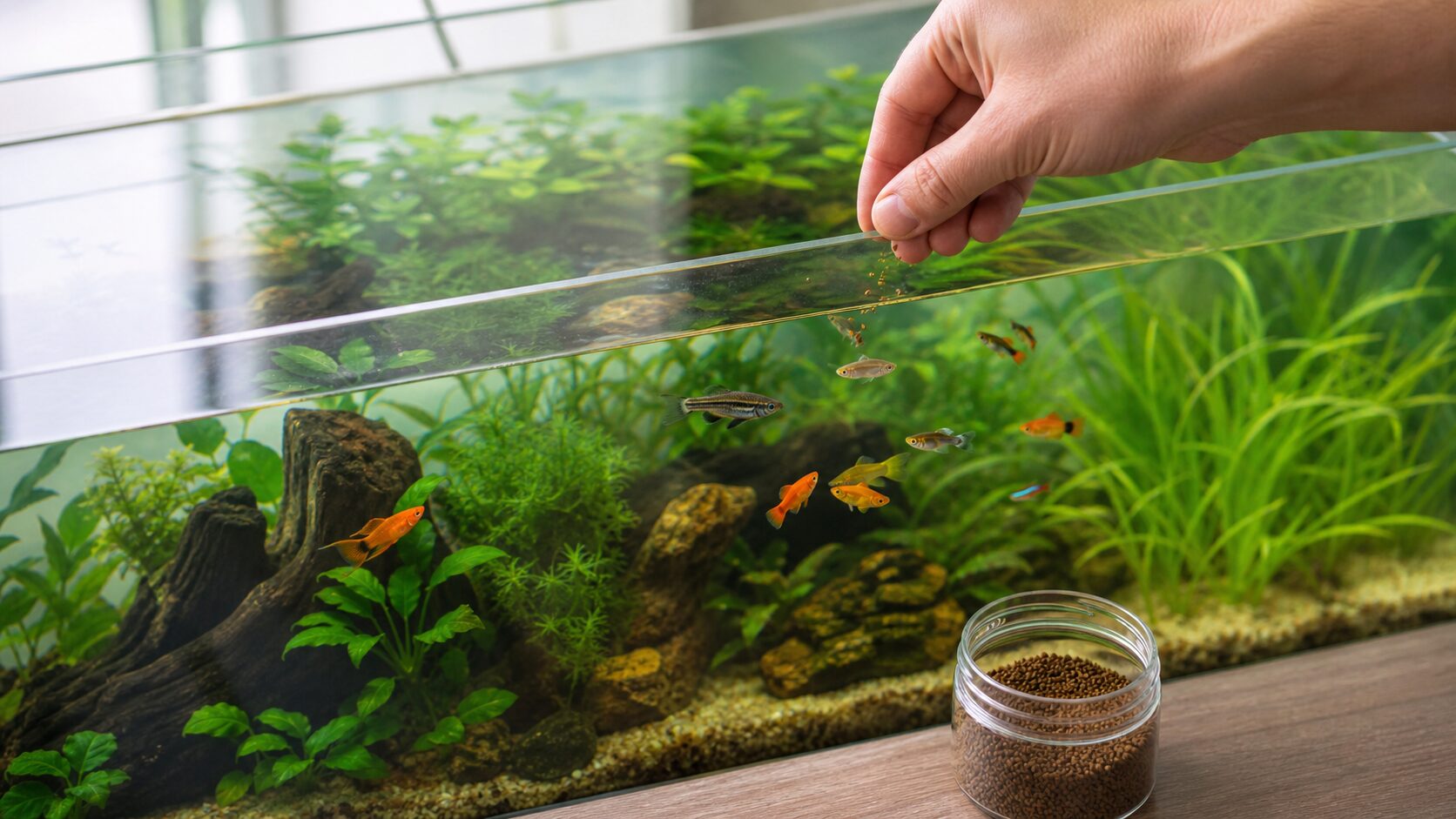
For many community fish, a practical starting point is only the amount they can finish in roughly two to three minutes. This is a starting observation, not a strict rule for every species. Babies, grazers, nocturnal fish, and larger predatory fish may need a different schedule or food placement.
Use food that fits the fish
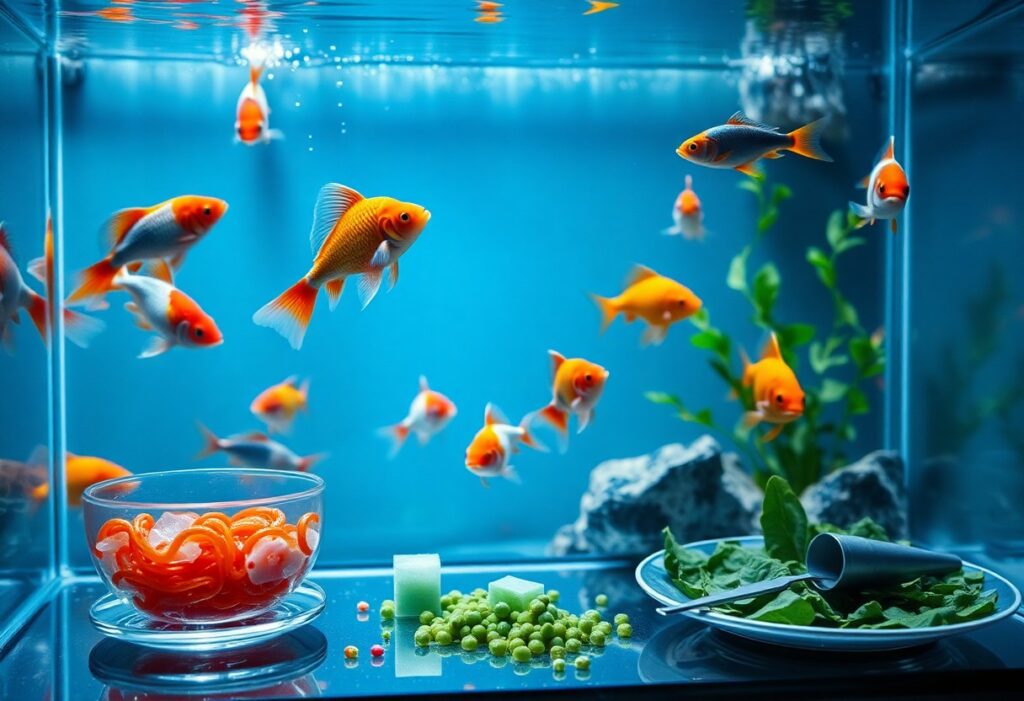
Before deciding how much to feed, make sure the food suits the fish. Surface feeders may do better with floating foods, mid-water fish may use slow-sinking foods, and bottom feeders need food that reaches them. Species may also differ in whether their diet should emphasize plant material, protein, or a more varied mix.
Learn more about labels and ingredients in What Is Fish Food Made Of? and compare formats in What Are Fish Food Flakes Made Of? Flakes vs Pellets.
A simple feeding routine for beginners
- Offer a very small first portion. A pinch, a few pellets, or a small piece of the appropriate food is easier to adjust than an oversized serving.
- Watch who eats. Check whether shy, bottom-dwelling, or slower fish are getting a chance to feed.
- Watch what remains. Food that sits uneaten is a signal to reduce the next portion or change how it is delivered.
- Adjust gradually. Change one part of the routine at a time so you can see how the fish and water respond.
- Keep a consistent schedule. Regular timing makes it easier to notice a real change in appetite or behavior.
How often should aquarium fish eat?
Many adult community fish can do well with one daily feeding or two smaller feedings. The right frequency still depends on the species, age, temperature, and feeding style. Growing fry and fish that graze throughout the day may need more frequent, smaller opportunities to eat. Nocturnal fish may need food after the aquarium lights are off so active daytime fish do not take it first.
Signs you may be feeding too much
- Visible food remains on the substrate after feeding.
- The water becomes cloudy or there is more waste than usual.
- Algae or scavenger populations increase alongside excess food.
- Fish consistently ignore food at the next feeding.
These signs can have more than one cause, so use them as a reason to observe water quality and feeding behavior rather than as a diagnosis on their own. Remove uneaten food when practical and reduce the next serving instead of making a large sudden change.
Keep food fresh
Even a correct portion is less useful when food has been stored poorly. Keep dry food sealed, dry, and away from heat and moisture. For storage guidance, read Can Fish Food Go Bad?.
When to get species-specific advice
Look for species-specific guidance when you keep fry, goldfish, cichlids, bottom feeders, nocturnal fish, or fish on a specialized diet. An aquatic veterinarian, experienced aquatics professional, or the food manufacturer feeding guidance can help when appetite changes suddenly or a fish has an ongoing health concern.