Filter size is not only about the number on the tank box. Use your working water volume, the fish you keep, the flow they tolerate, and the manufacturer rating for the exact filter.
Start with the actual aquarium
Decorations and substrate reduce water volume, while active fish, heavier stocking, and waste-producing species can change filtration needs. A filter should move and clean water without creating a current that stresses the fish.
Read the manufacturer rating
Use the manufacturer tank-size range as the starting point, then consider the room for media and whether the flow can be adjusted. Aqueon recommends choosing a filter rated at least one size larger than the aquarium for added capacity, but product instructions still take priority.
Check the result after setup
Watch flow, temperature distribution, debris collection, and water-test results. A filter cannot correct overstocking or replace regular maintenance. See How Often to Change Fish Tank Water and Aquarium Filter Media Order for the next steps.
If the size and waste load point toward an external option, see Canister Aquarium Filter: What It Does and Who It Suits before choosing a model.
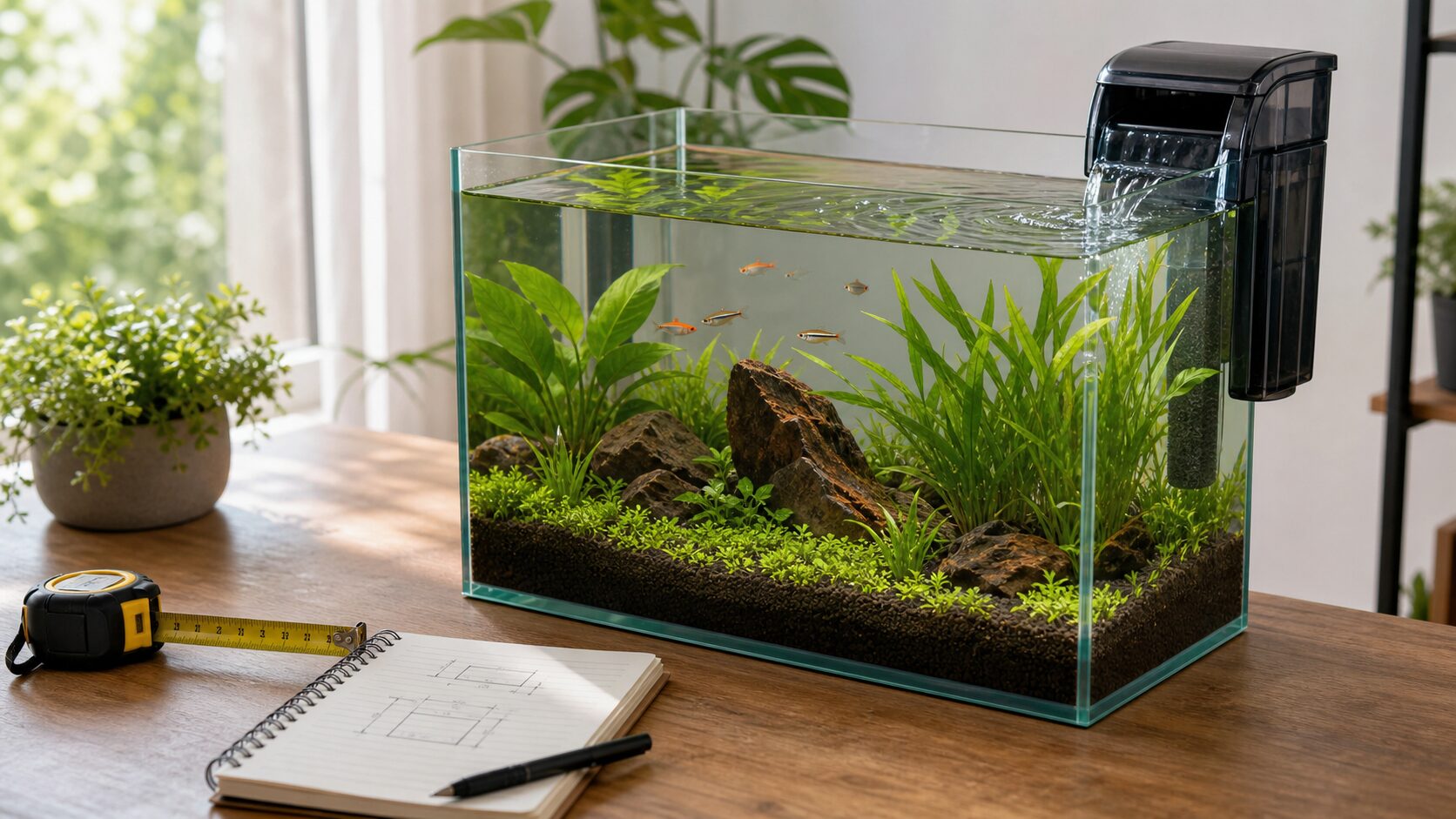
For a practical overview of a common small-to-mid-size option, see Hang-On-Back Aquarium Filter: A Beginner’s Guide.
Source
Fish Tank Filter Size Chart: A Simple Starting Point
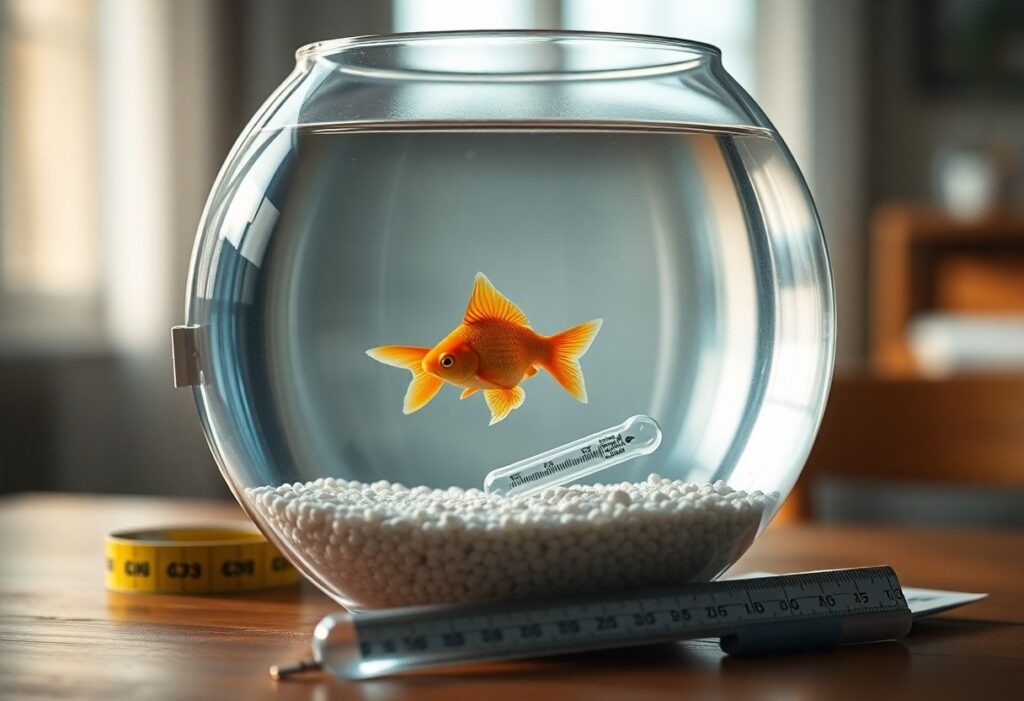
Use the exact manufacturer rating as the primary check. For a simple planning worksheet, write down your working water volume, livestock, desired flow, and the filter model rating. A 20-gallon aquarium, for example, still needs a filter selected for its actual water volume, stocking, and flow tolerance rather than a universal number.
Fish Tank Filter Size Calculator: What to Compare
- Start with the water volume after substrate and decor.
- Check the manufacturer tank-size rating and adjustable-flow options.
- Consider fish behavior and whether strong current would be a problem.
- Confirm water movement and water-test results after setup.