Choosing filter media can feel complicated because filters use different baskets, cartridges, trays, and water paths. The useful starting point is simple: follow the direction water travels through your specific filter, then protect the media that does the most long-term work.
Quick answer: follow the water path first
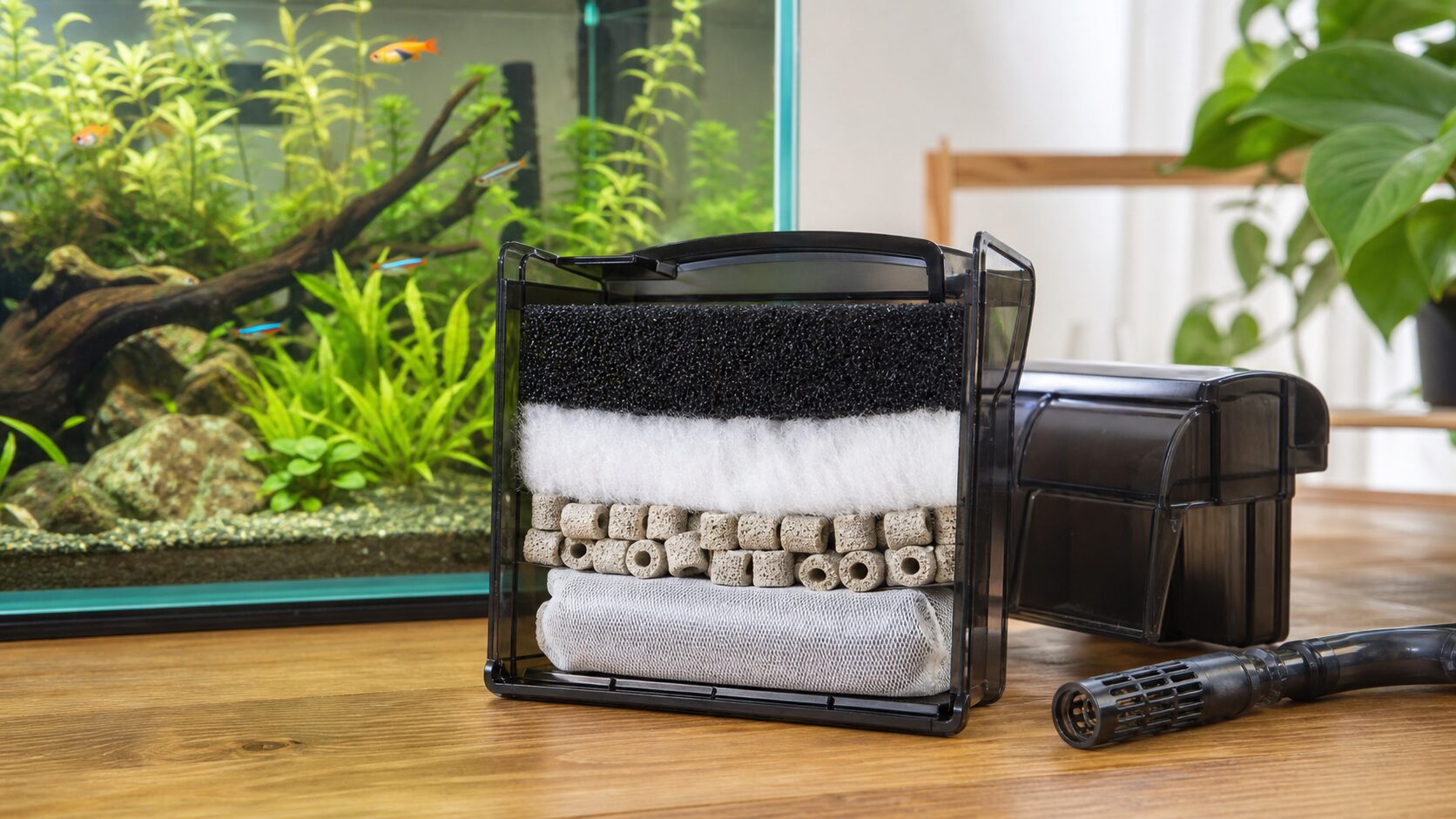
For many filters, a practical sequence is coarse mechanical media first, finer mechanical media next if needed, biological media after that, and optional chemical media near the end of the water path. This is not a universal stack. Your filter manual and the actual water-flow direction take priority over any generic diagram.
What each type of filter media does
Mechanical media
Mechanical media catches visible particles. A coarse sponge is often placed where water first enters because it catches larger debris before it reaches finer materials. Fine floss or polishing pads can catch smaller particles, but they may clog sooner and need closer attention.
Biological media
Biological media provides surface area for the bacteria that support the aquarium nitrogen cycle. Ceramic rings, porous biomedia, and established sponge material can all serve this role. Keep this media supplied with flowing water without allowing it to become packed with heavy debris.
Chemical media
Chemical media is optional for many freshwater aquariums. Some products are designed for specific tasks, such as removing selected dissolved compounds or clearing medication after a treatment. Use it only when the product instructions and the aquarium situation call for it.
A beginner-friendly way to arrange media
- Read the filter manual. Confirm where water enters and where it returns to the aquarium.
- Start with a coarse layer. Put the easier-to-rinse mechanical stage where it can intercept larger debris.
- Add finer mechanical media only when it helps. It can polish water, but it should not become a neglected blockage.
- Protect the biological stage. Keep it after the main debris-catching layer so it does not need frequent replacement.
- Add optional chemical media last. Only do this when it fits the goal and your filter instructions.
Why one fixed order does not fit every filter
Hang-on-back filters, canister filters, internal filters, and proprietary cartridge systems move water differently. A generic order can become wrong if it ignores the actual flow path. Before changing anything, trace the route water takes through your filter and compare it with the manufacturer guidance.
How to avoid disrupting beneficial bacteria
Do not replace every piece of established media at the same time unless the manufacturer gives a clear safety reason to do so. When mechanical media is dirty, rinse it gently in removed aquarium water rather than untreated tap water when practical. Replace only the worn component you need to replace, then keep an eye on flow and water tests as the system settles.
For a deeper maintenance routine, read How Often to Clean a Fish Tank Filter Safely, How Often to Change Fish Tank Filter Cartridges, and How Often to Change Fish Tank Water.
Common mistakes to avoid
- Copying a media stack from a different filter without checking water direction.
- Replacing all established media on the same day.
- Using fine floss as the only stage and letting it clog unnoticed.
- Running chemical media continuously without a clear reason.
- Using soap or household cleaners on filter parts.
If you use a sponge filter or are deciding whether it fits the aquarium, read Sponge Aquarium Filter: How It Works and When It Fits.
For a filter type that uses flexible media baskets, read Canister Aquarium Filter: What It Does and Who It Suits.