Quick answer: the best aquarium water test kit is the one you can use correctly and consistently for the parameters your aquarium needs. A broad liquid kit is often useful for routine freshwater troubleshooting, strips are convenient for quick screening, and digital meters can help with a specific measurement. No single format is automatically best for every tank.
Clear water can still contain invisible ammonia, nitrite, or other compounds. Testing gives you evidence before you change food, filtration, water-change frequency, or equipment.
What should an aquarium test kit measure?
For a typical freshwater aquarium, useful core tests include pH, ammonia, nitrite, and nitrate. Depending on the fish, plants, source water, and local conditions, you may also need hardness, alkalinity, phosphate, chlorine, or other tests. Saltwater and reef aquariums need a different testing plan, so always match the kit to the system rather than buying only by the number of tests on the label.
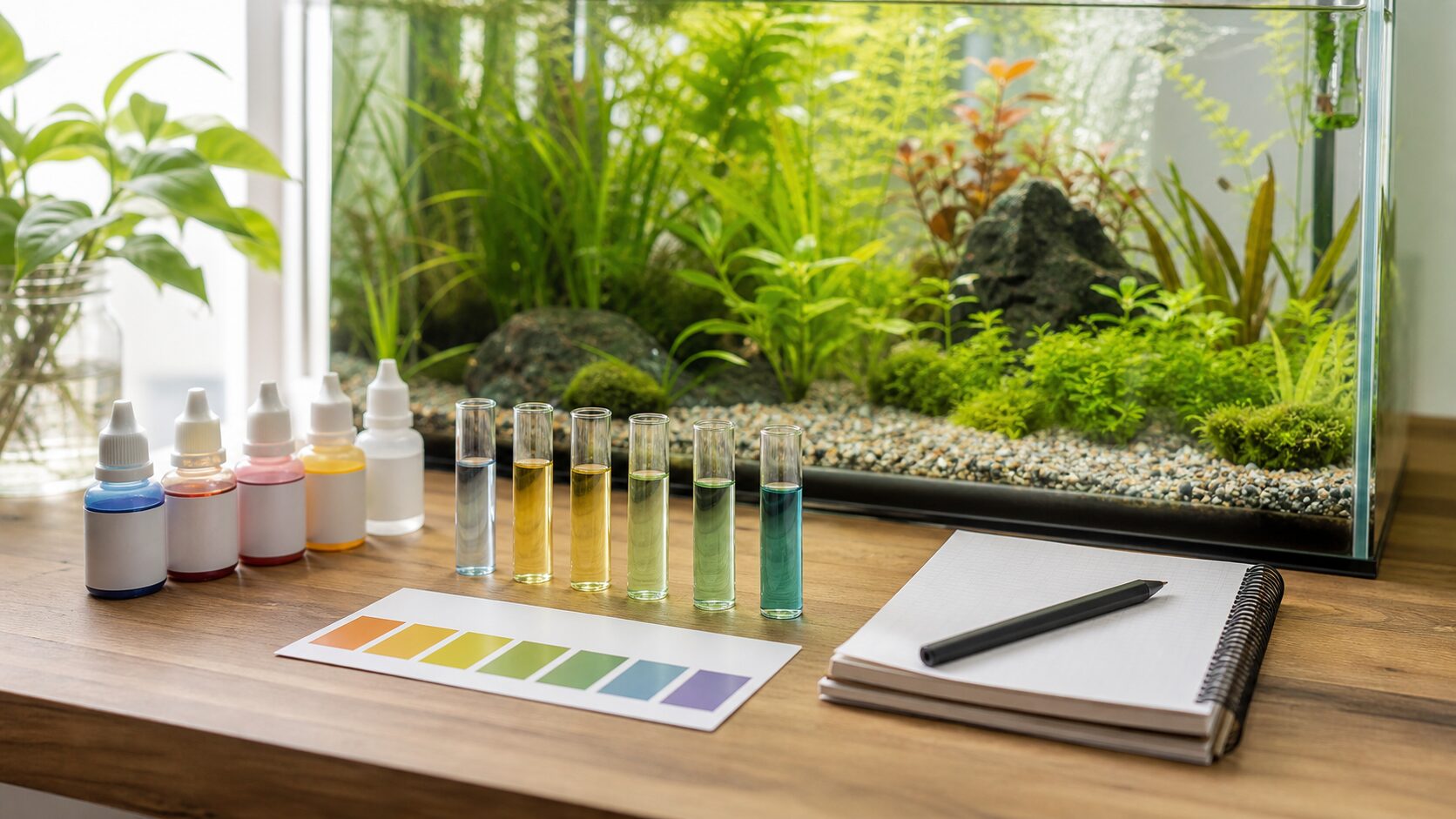
The API Freshwater Master Test Kit, for example, covers pH, high-range pH, ammonia, nitrite, and nitrate. That list is useful as a reference point, but it does not mean the same kit is complete for every aquarium.
Liquid kit vs. strips vs. digital meters
| Format | Best use | Watch for |
|---|---|---|
| Liquid reagent kit | Routine multi-parameter checks and troubleshooting | Exact sample volume, drop count, timing, and color comparison |
| Test strips | Fast screening and frequent trend checks | Storage conditions, expiry date, timing, and the parameters included |
| Digital meter | Repeated measurement of one supported parameter | Calibration, clean probes, storage solution, and model limitations |
A digital pH meter does not replace ammonia or nitrite testing. Likewise, a strip that omits ammonia cannot tell you whether ammonia is present. Read the package before buying and make a checklist of the parameters you need.
How to choose the right kit
- Identify whether the aquarium is freshwater, saltwater, planted, or reef.
- List the species and their care requirements.
- Check which parameters the kit actually measures.
- Confirm the measurement range is useful for your system.
- Look at the instructions before purchase if they are available.
- Choose a format you will realistically use, record, and replace before expiry.
Do not choose only by the lowest price per box. A kit that is difficult to read or lacks a critical parameter can create false confidence. It is often better to combine a dependable core kit with one or two separate tests required by your livestock or source water.
A repeatable testing routine
Take the sample from the main body of the aquarium, away from freshly added conditioner or a concentrated return flow. Use clean test containers and follow the manufacturer instructions exactly. Small changes in sample volume, shaking, reaction time, or lighting can alter the reading. Compare colors in neutral light and record the result with the date, water change, feeding changes, and any symptoms you observed.
Test more often during cycling, after a major maintenance change, when fish behave abnormally, or when you are diagnosing cloudy water. A stable aquarium may need a different routine, but regular trend data remains more useful than a single isolated number.
Common mistakes
- Assuming clear water means safe water.
- Using an expired reagent or strip stored in heat or humidity.
- Reading the test before or after the instructed time window.
- Rinsing test equipment with soap or household cleaner.
- Changing several things at once after one surprising result.
- Trying to force pH to a generic target without considering the species and source water.
If a result is unexpected, repeat the test carefully and, when possible, compare it with another valid method before making a large correction.
Frequently asked questions
Is a multi-test kit better than separate tests?
A multi-test kit is convenient when it includes the parameters you use regularly. Separate tests can be sensible for a parameter missing from the main kit or one that needs a different range. Compare the included tests, expiry dates, and expected testing frequency before deciding.
Can an aquarium store test my water?
A store test can provide a useful second check, especially when you bring a fresh sample in a clean container. Ask for the actual results rather than only “good” or “bad,” and record the method used. Home testing is still valuable because it lets you track changes promptly.
Once you have chosen a test format, use this aquarium water parameters test kit guide to decide which measurements belong in your routine.
If pH is the reading you need to investigate, follow this aquarium water pH test kit guide to compare methods and avoid chasing an unsupported target.