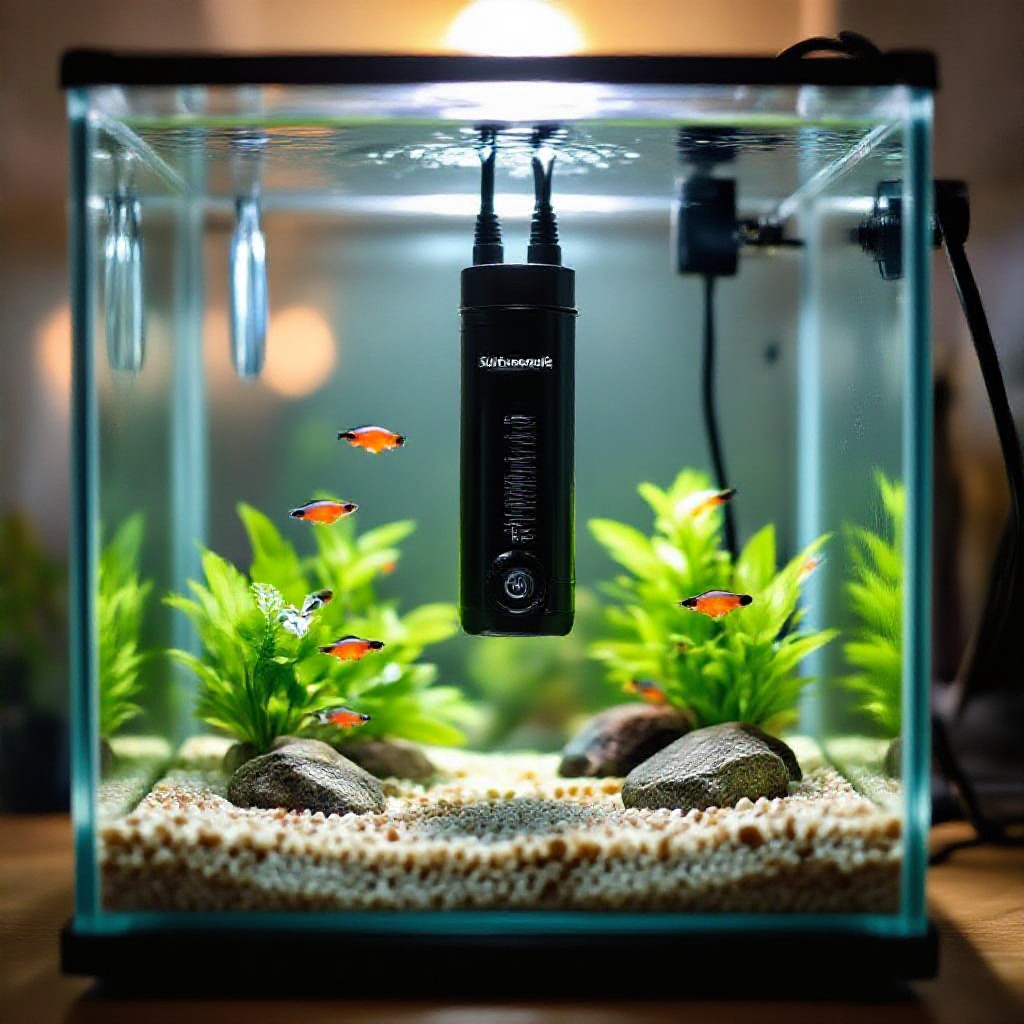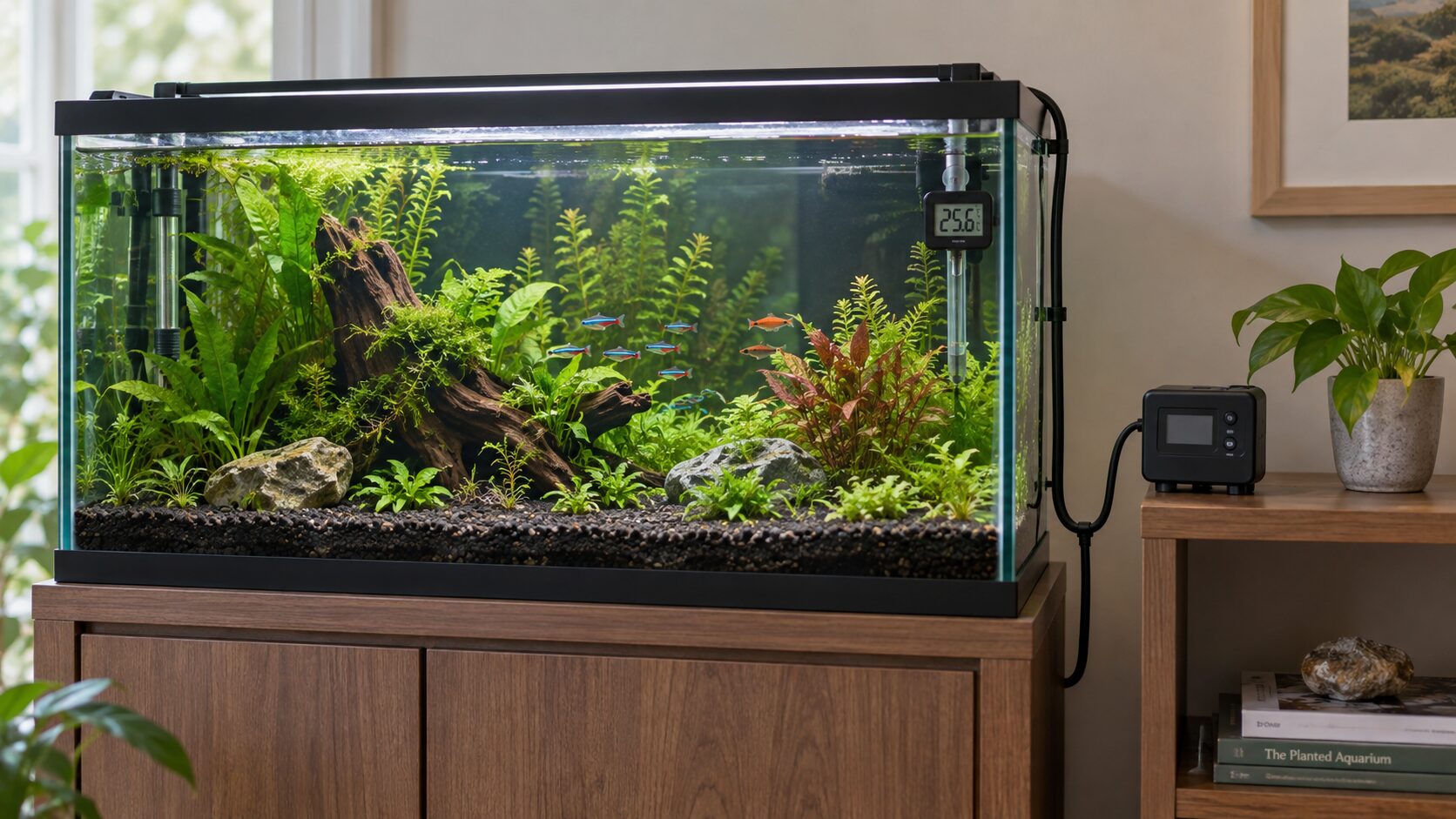
An aquarium heater controller is an external device that monitors temperature and can control compatible heating equipment according to its own settings. It can add a separate temperature reference and a documented control method, but it does not make a heater safe by itself or replace the instructions for either product. Choose one only after confirming compatibility, installation limits, and the way it responds to an abnormal reading.
This guide is about deciding whether a controller fits an aquarium and what to check before relying on one. It is not an electrical-installation guide. Keep plugs, connectors, and non-submersible components dry, use drip loops where the manufacturer requires them, and stop using damaged equipment.
Quick answer: a controller adds a separate control layer
A controller can be useful when you want an independent temperature display and a documented way to switch compatible heating equipment according to the controller’s reading. It may help you monitor the aquarium more deliberately, especially where temperature stability matters or the aquarium environment changes. It is not a reason to ignore a heater’s rating, water-level limits, installation instructions, or the need for a separate thermometer check.
Start with the exact controller and heater manuals. Inkbird’s ITC-306A support page, for example, provides a model-specific manual rather than a universal setup rule. Features and safety requirements vary by model, plug, region, heater type, and aquarium setup.
What an aquarium heater controller can do
A compatible controller uses a temperature sensor or probe to monitor its chosen location, compares that reading with a configured target, and operates a connected outlet or control function within its documented limits. Some designs are built for heating only, while others may include a cooling function or additional alarms. The product manual is the authority for what a particular model actually controls.
This can be different from relying only on a heater’s own dial or display. A controller gives you another way to observe the temperature and a separate configured response. It does not guarantee that the probe is correctly placed, that the heater is suitable for the tank, or that water temperature is identical in every part of the aquarium.
When a controller may be worth considering
A controller may be worth considering when you need clearer temperature monitoring, use compatible equipment with documented controller support, or want an additional protection layer that the manufacturer specifically describes. It can also be useful when the aquarium is in a room with changing ambient conditions and you want a consistent way to observe the result.
Do not add a controller simply because a temperature reading seems wrong once. First check the aquarium layout, room conditions, heater instructions, and a second reading. The guide to reading an aquarium thermometer explains how to compare an unexpected result before making an equipment change.
Check compatibility before buying or connecting anything
Read the controller manual and the heater manual together. Confirm the controller is designed for the electrical supply, load, and equipment type you plan to use. Confirm what the controller expects from the attached heater and whether it has location, ventilation, dry-placement, or outlet-use restrictions. Do not assume a controller that works with one heater will safely control every model.
Also confirm whether a connected device has its own controls that must be set in a specific way for the controller’s documented operation. Follow only the written instructions for those exact products. Do not bypass a thermostat, modify a plug, splice wires, or attempt to make unsupported equipment compatible.
Probe position changes the meaning of the reading
A controller can only react to the temperature at its sensor. Place the probe only where the manual permits and where it reflects a representative part of the aquarium, not an area immediately influenced by a heater, direct sunlight, or a draft. Water movement, tank shape, and equipment layout can create different local conditions.
Use a separate thermometer in another representative location as a cross-check. The aquarium thermometer guide covers types, placement, readability, and practical comparison checks. If two readings do not agree, investigate placement and instructions before changing temperature settings.
Do not use a controller to oversize a heater
A controller does not turn an unsuitable heater into the right size for the aquarium. Heater selection still depends on actual water volume, room conditions, target range, cover, water movement, and manufacturer guidance. The fish tank heater size guide explains those planning factors.
An oversized, damaged, or incorrectly installed heater can still create a problem. Choose equipment rated for the setup, mount it only as instructed, and verify actual water temperature after the aquarium has stabilized. A controller should support a sound equipment plan, not compensate for an unsafe one. If the heater itself seems inactive or unreliable, follow the safe aquarium heater troubleshooting checks before deciding whether it needs manufacturer support or replacement.
Use documented alerts and fail-safe behavior
Some controllers include alarms, limits, or heating and cooling outlets. Treat these as model-specific features rather than universal protections. Learn what the device does when it loses power, reads outside its range, detects a probe issue, or reaches a configured limit. The manual should define the expected behavior and any user action required.
Do not assume an alarm means the aquarium is safe to leave unchecked. An unusual reading still calls for observation of the water, heater, circulation, and aquarium inhabitants. If equipment is wet where it should be dry, damaged, overheating, or behaving unexpectedly, disconnect it safely according to the product instructions and seek manufacturer or qualified technical support.
Keep the electrical setup dry and accessible
Controllers and associated plugs need a dry location, strain relief where required, and access for routine inspection. Avoid enclosing equipment in a damp, unventilated space or routing cables where they can be pinched, submerged, or pulled. Use a drip loop when the manufacturer requires it so water cannot run along a cord toward an outlet.
Do not place a non-submersible controller or power connection where splashes, condensation, or aquarium maintenance can reach it. Do not open the controller or attempt a repair unless the exact manufacturer documentation identifies a user-serviceable procedure.
Common mistakes to avoid
- Choosing a controller without verifying the exact heater and electrical compatibility.
- Placing a probe beside a heater, in direct sunlight, or in a stagnant corner.
- Using the controller reading without a separate aquarium thermometer check.
- Changing several temperature settings repeatedly before the aquarium stabilizes.
- Using a controller to justify an oversized, damaged, or unsupported heater.
- Ignoring moisture, ventilation, cable-routing, or manufacturer safety limits.
- Attempting wiring, repair, or thermostat bypass work not documented by the equipment maker.
Frequently asked questions
Do I need a heater controller for every aquarium?
No. A correctly selected and installed heater, routine temperature monitoring, and stable aquarium conditions are the foundation. A controller may add useful monitoring and documented control for compatible setups, but it is not mandatory for every tank.
Can a controller replace an aquarium thermometer?
No. Treat the controller’s sensor as one reading and use a separate thermometer to check the water elsewhere in the aquarium. Different placement can produce different results.
What should I do if the controller and thermometer disagree?
Do not make a large immediate change. Check sensor placement, let the aquarium settle, compare another suitable thermometer, and follow the exact product instructions. Stop using damaged or unsafe equipment.
Related guides
- Aquarium thermometer guide
- How to read an aquarium thermometer
- Where should an aquarium heater be placed?
- What size fish tank heater do I need?