When an aquarium heater does not seem to be working, the safest first step is to check the water temperature with a separate thermometer and look for obvious problems without opening, repairing, or testing the heater while it is energized. A heater can cycle on and off normally, be too small for the conditions, be installed outside its model-specific limits, or have a genuine fault. The light on a heater, by itself, is not proof that the aquarium water is at the intended temperature.
Stop using the heater and contact the manufacturer or a qualified service option if you find cracked glass, a damaged cord or plug, water where it should not be, an unusual smell, smoke, overheating, or a water temperature that is rising unexpectedly. Do not keep using damaged electrical equipment. This guide covers safe observations and the next questions to ask; the manual for the exact model remains the authority for installation, submersion, settings, and service.
Start with the aquarium temperature, not the indicator light
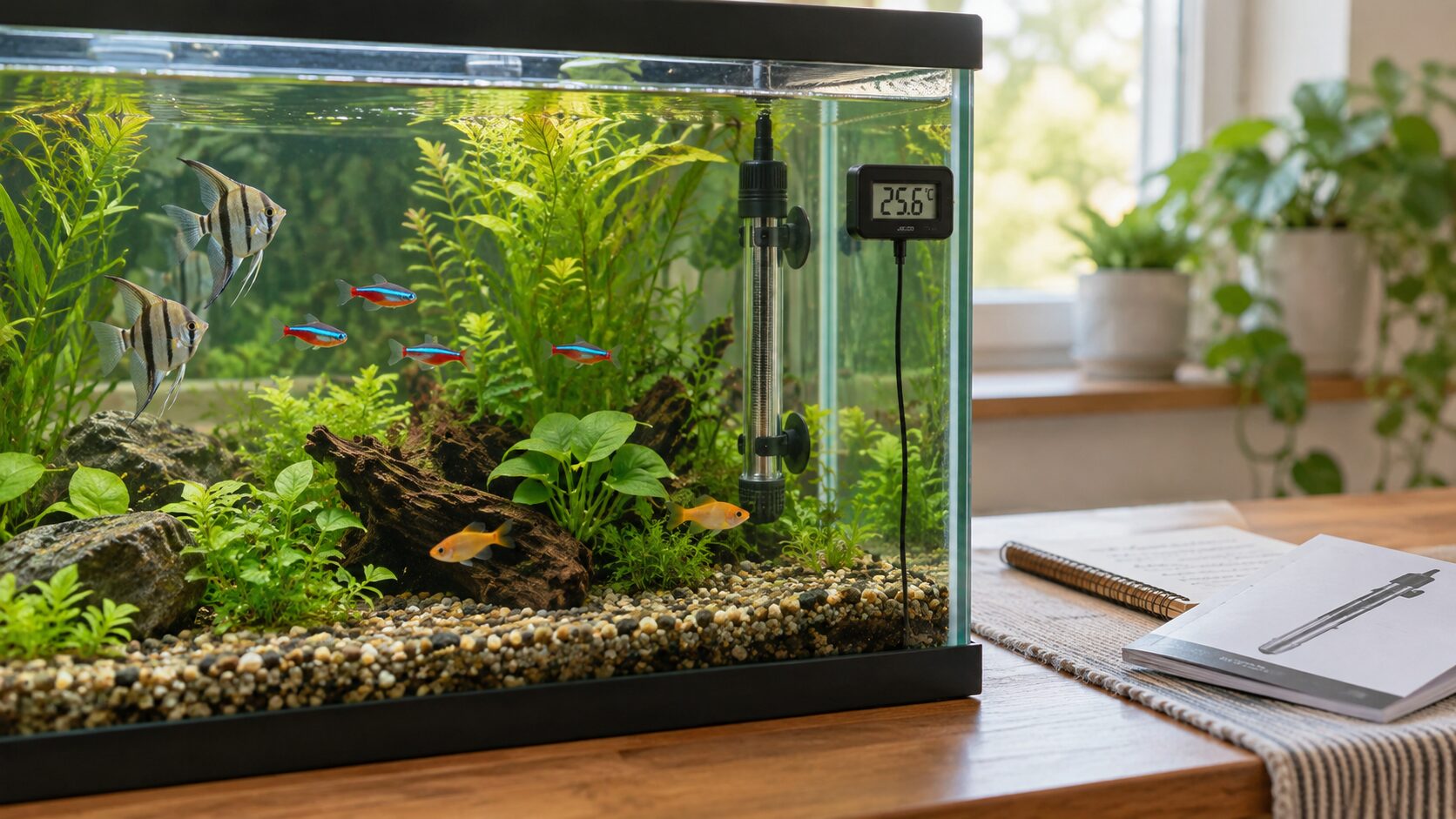
Use a separate aquarium thermometer to find out what is actually happening in the water. A heater’s indicator may show that its thermostat is calling for heat, or it may go dark after reaching its own set point. Neither observation tells you whether the reading is representative of the tank. Put the thermometer where it can settle in the water, away from a direct heater stream when practical, and give it time to stabilize before deciding that the heater has failed.
Our aquarium thermometer guide explains the differences between thermometer types and why a separate reading is useful. If the number looks surprising, follow the careful comparison steps in how to read an aquarium thermometer correctly before changing any heater setting.
Know the conditions that mean stop using it
Do not troubleshoot an electrical fault by taking the equipment apart. Stop using the heater if its body, cable, plug, connection, or seal appears damaged. Treat a burning smell, smoke, visible leakage where it is not meant to occur, repeated tripping of protective equipment, or an unexplained high water temperature as a reason to disconnect it according to the product instructions and seek manufacturer support.
Before a water change or removing a heater, follow the exact manual. Hygger’s HG308 manual, for example, directs users to power the device off and allow a cooling period before a water change or removal. That is a model-specific instruction, not a universal timing rule. Do not assume every heater has the same water-level mark, cooling interval, protection feature, or permitted placement.
Check whether normal cycling explains the observation
Many heaters do not heat continuously. They cycle as the local temperature around their sensor changes. If the aquarium is close to the intended temperature and the heater light is off, that can be normal. If the light is on but the water remains below the intended range, wait long enough for the aquarium water to respond, then compare the actual temperature again. Rapidly turning a heater up and down can make a small problem harder to interpret.
Look at the trend rather than a single glance. Is the temperature stable? Is it gradually falling during a cold part of the day? Is it rising beyond the intended range? Record the target setting, separate thermometer reading, room conditions, and any visible indicator behavior before asking support for help. Those observations are more useful than a guess that the thermostat is broken.
Confirm the model-specific installation requirements
Read the exact manual before moving the heater or changing the water level. Some heaters are designed to be fully submerged, while others have a marked minimum or maximum water line. Installation direction, required water flow, mounting position, and compatible aquarium type can also differ. A retailer support article from All Pet Solutions recommends checking visible damage, cable/connection condition, intended setup, and whether the heater is appropriately sized, while referring damaged units to customer service.
Do not use a generic online repair tip to override the manual. A forum post, a video, or a result for another model cannot establish that your heater can be reset, opened, re-sealed, or used in the same way. When the manual is missing, locate it through the manufacturer before relying on the unit.
Consider whether the heater is undersized for the conditions
A heater can be working but unable to maintain the desired temperature in a larger tank, a cool room, or an aquarium with heat loss and water movement that differ from the original setup. Start with the tank volume and the manufacturer’s stated application range. Then consider whether the room temperature has changed, whether the aquarium has a lid or open top, and whether cold drafts are affecting the tank.
Use what size fish tank heater do I need? to review sizing as a separate decision. Do not solve a suspected fault merely by adding more wattage or buying another heater before you have checked the actual water temperature and the safe installation requirements.
Review placement and water movement safely
A heater needs conditions that match its instructions. Water movement can help distribute heat, while an awkward location can make a nearby sensor respond differently from the rest of the aquarium. The goal is not to move powered equipment repeatedly. Switch off and let equipment cool as its manual requires before handling it, then verify placement against the exact model directions.
For the broader placement questions, see where should an aquarium heater be placed?. That guide is about suitable placement; this one is about deciding whether an apparently inactive or ineffective heater needs manufacturer support or replacement.
What not to do when a heater seems faulty
- Do not open the body, cable, plug, thermostat, or sealed end of the heater.
- Do not splice a damaged cord, replace internal parts, bypass a control, or test it while wet or energized.
- Do not rely only on an indicator light or a heater’s built-in setting as a temperature reading.
- Do not place a damaged heater back into service to see whether the problem returns.
- Do not use an aquarium heater controller or a second heater as a way to continue using a damaged unit.
When to contact the manufacturer or replace the heater
Contact the manufacturer when you have a model-specific question, a warranty concern, a visible defect, or a unit that does not behave as documented. Give them the model, tank size, separate thermometer reading, target setting, room conditions, installation details, and photos of visible damage if they request them. Follow their instructions for service or replacement.
Replacement is the safer path when an electrical heater is damaged or when manufacturer guidance says it should not remain in use. If you need to maintain conditions for temperature-sensitive livestock while resolving the issue, use a temporary plan that is appropriate to the aquarium and seek local professional or manufacturer guidance rather than improvising an electrical repair.
A simple observation checklist
- Read the water with a separate thermometer and allow the reading to settle.
- Compare that reading with the intended temperature and watch the trend over time.
- Stop use if you find damage, overheating, unusual odor, smoke, leakage, or unexplained overheating.
- Check the exact model manual for its setup, water-level, cooling, and service requirements.
- Review tank volume, room conditions, and placement without handling powered equipment.
- Contact the manufacturer or replace the unit when the facts point to damage or an unresolved fault.
Frequently asked questions
Why is my aquarium heater light on but the water is still cold?
An indicator can show that the heater is requesting or providing heat, but it does not prove the aquarium has reached the intended temperature. Verify with a separate thermometer, consider whether the heater is appropriately sized for the actual conditions, and follow the model manual. Stop using the heater if there are any signs of damage or unsafe behavior.
Can I reset an aquarium heater?
Only follow a reset procedure when the manufacturer documents one for your exact model. Do not open the unit, bypass a control, or use a generic reset method found online.
Should I replace an aquarium heater that stopped working?
Visible damage, abnormal odor, smoke, leaking where it should not, or unexplained overheating are stop-use conditions. For other cases, compare a separate temperature reading with the manual and ask the manufacturer whether the model should be serviced or replaced.