Aquarium plants need enough usable light for their species and setup, but the answer is not one fixed number of hours or one brightness setting. The light reaching leaves depends on the fixture, water depth, plant position, floating plants, and how the rest of the aquarium is managed. Start with a repeatable, conservative schedule. Then change one major variable at a time while watching new growth and algae.
For a newly planted aquarium, Tropica suggests starting at about six hours of light daily for the first two to three weeks, then gradually increasing toward eight to ten hours. Treat that as a starting framework rather than a promise. A low-demand tank with shade-loving plants may need a different approach from a dense aquascape with high-light stems and added carbon dioxide.
Quick answer: start with a consistent schedule
Give aquarium plants a dependable daily light period, usually starting conservatively and increasing only when the aquarium is stable. Use a timer so the beginning and end of the day are consistent. Avoid solving slow growth by extending the schedule and raising brightness at the same time. That makes it difficult to tell what helped and can make algae harder to manage.
The goal is not to keep the aquarium light on for as long as possible. It is to match the light reaching the plants with their needs and with the nutrients, circulation, maintenance, and carbon dioxide approach used in the aquarium.
Separate duration from intensity
Duration is how long the light is on. Intensity is how much usable light reaches the plant. A bright fixture for a short period can behave differently from a dim fixture that stays on all day. Water depth, mounting height, shade, and coverage also change the light at the leaves.
Do not judge intensity only by how bright the aquarium looks to you. Human visual comfort and plant response are not the same thing. When a manufacturer provides relevant PAR measurements, compare the test depth and coverage area with your aquarium rather than relying only on the number directly below the center of the lamp.
Use a timer from the first day
A timer gives plants and the rest of the aquarium a repeatable day and night pattern. It also gives you a clean baseline for observing what happens after a change. Set the timer for the same schedule every day rather than switching the light on and off whenever the room is occupied.
Leave a real dark period. Keeping the main light on continuously does not give you a clearer experiment and can make the aquarium harder to balance. If you want to view fish after the main schedule, use only lighting and practices supported by the equipment instructions, and do not turn an occasional viewing habit into an extended second daylight period.
Start conservatively in a new planted aquarium
New plants are adapting, roots may still be establishing, and the aquarium’s nutrient and maintenance routine may not yet be steady. Beginning with a shorter, consistent schedule gives you room to adjust gradually. Tropica’s six-hour starting framework for the first two to three weeks is useful precisely because it avoids assuming a newly planted tank needs the maximum duration immediately.
After that initial period, increase only when the aquarium is responding well. Make a small change, keep the rest of the routine stable, and give new growth time to show you the result. Do not extend the duration every few days because older leaves still look imperfect; they formed under earlier conditions and may not improve.
Match light to the plants and tank layout
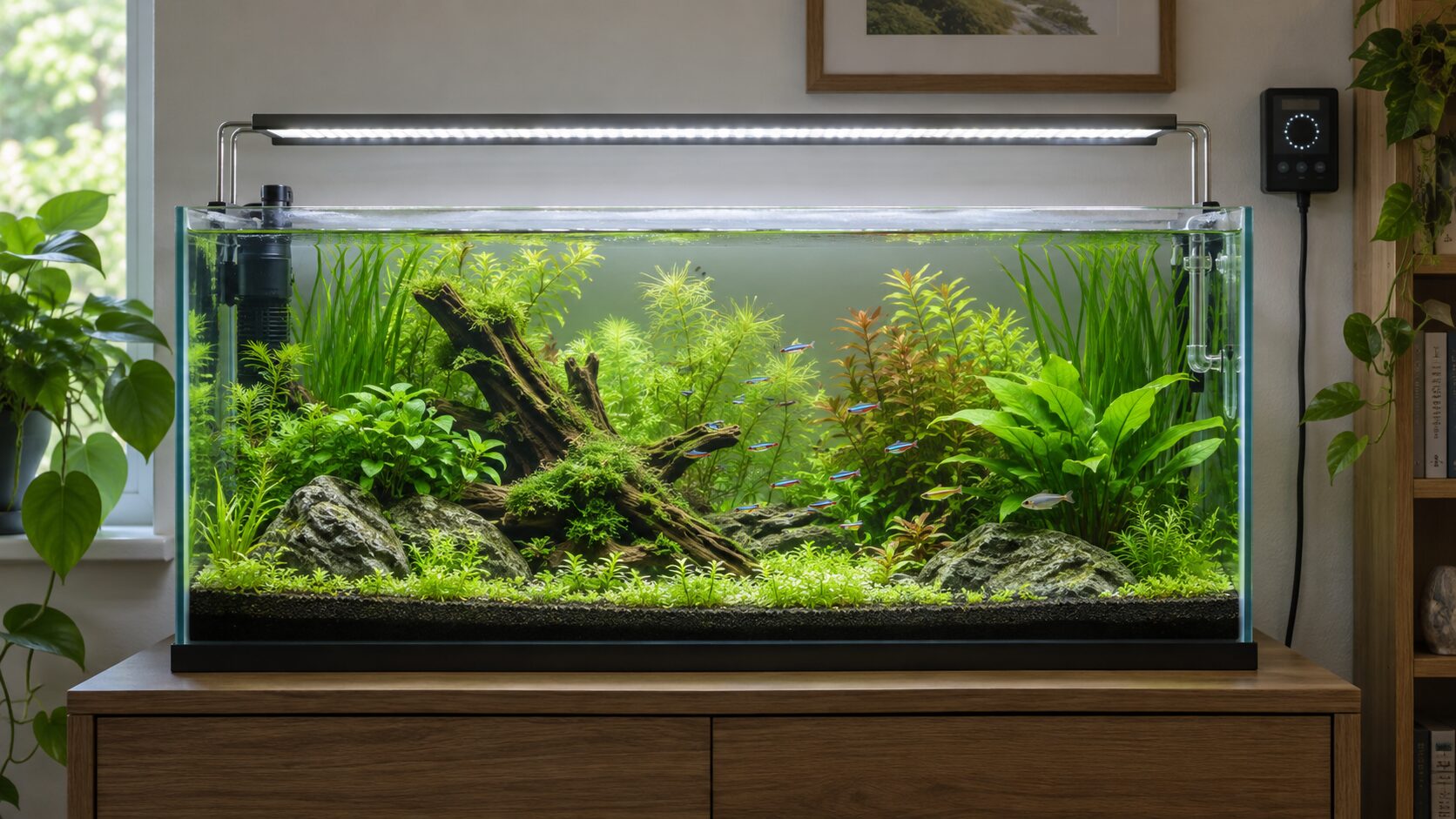
Low-demand ferns, mosses, and shade-tolerant plants are different from carpeting plants, dense red stems, or a layout designed around rapid growth. List the plants you actually have, including any floating plants or tall stems that create shade. Then look at where each plant sits relative to the fixture and water surface.
A tank can contain bright and dim zones at the same time. Hardscape, dense planting, a narrow fixture, or uneven mounting can leave lower leaves and corners with less light than the center. The aquarium light for plants guide explains how fixture coverage, mounting, and control support that decision.
Account for direct sunlight separately
Daylight from a nearby window can add changing light that the aquarium timer does not control. Observe whether sun reaches the glass or leaves at a particular time, especially after a seasonal change or when curtains are opened. Do not compensate for direct sun by casually extending the programmed light period. Reduce the uncontrolled influence first, then evaluate the regular schedule again.
Watch new growth before changing the schedule
New leaves and stems are more useful feedback than old damaged leaves. Watch for whether new growth is compact or stretched, whether leaves develop normal color for that plant, whether lower areas are losing leaves, and whether algae is increasing. Each sign can have more than one cause, so do not assume every issue calls for longer lighting.
Before changing light, check routine maintenance, water movement, nutrient approach, and water quality. An aquarium water parameters test kit can help you investigate water conditions alongside visual observations. Maintain a consistent water-change routine rather than treating light as the only lever; see the fish tank water change guide for the broader maintenance task.
Change one major variable at a time
If the aquarium needs an adjustment, choose one meaningful variable: duration, intensity, mounting height, shade, nutrient routine, or circulation. Record what changed and wait for a reasonable observation period. Changing several things at once may feel active, but it removes the ability to tell which change helped or caused a problem.
A simple note can be enough: date, timer duration, intensity setting if available, plant observations, and algae observations. You do not need an elaborate spreadsheet. You need a consistent record that helps distinguish a gradual plant response from a sudden equipment or maintenance change.
Do not use more light as a universal fix
More duration or intensity can increase demand elsewhere in the system. Plants still need appropriate nutrients and carbon dioxide availability for the setup, while algae can use an imbalance as an opportunity. If a tank is already receiving a consistent schedule, add light only after checking the whole system.
Likewise, do not make a large sudden reduction only because algae appears. First review recent changes, plant growth, feeding, maintenance, nutrient dosing, direct sunlight, and the current timer schedule. A measured change gives a clearer answer than a dramatic reset.
Frequently asked questions
Can aquarium plants get too much light?
Yes. Excessive duration or intensity can make a planted aquarium harder to balance and may contribute to algae pressure when other conditions do not support the stronger light. Increase gradually and observe new growth rather than assuming the brightest or longest setting is best.
Should aquarium lights be on at night?
No. Use a timer to provide a consistent dark period. An occasional room-light reflection is different from leaving the main aquarium light on through the night.
How do I know whether to increase the light?
Look at new growth, plant placement, coverage, and the stability of the rest of the aquarium. Check maintenance and water conditions first, then make one modest, documented adjustment if the evidence supports it.
Related guides
- Best aquarium light for plants
- Aquarium water parameters test kit
- Fish tank water change guide
- Aquarium thermometer guide