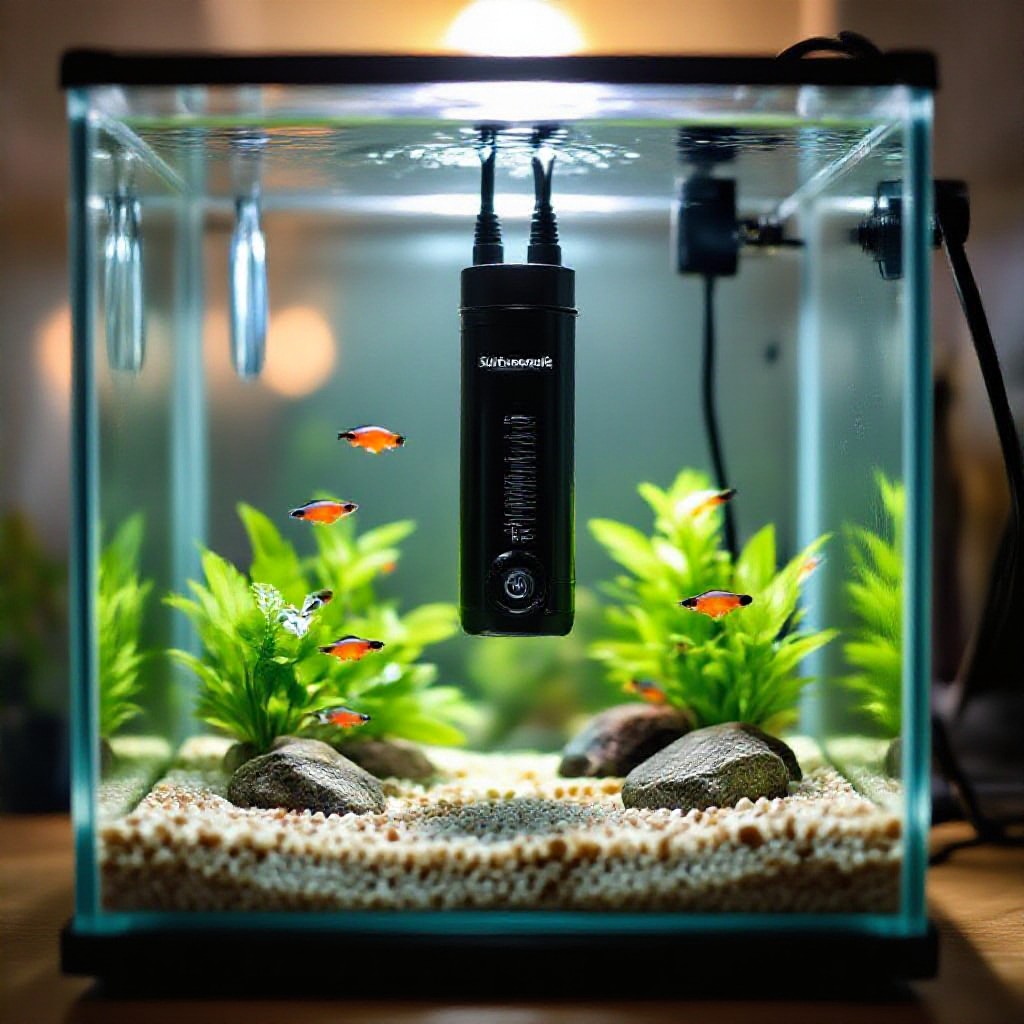
The best aquarium light for plants is not necessarily the brightest fixture. It is a controllable light that covers the tank evenly and supplies appropriate intensity for the plants, aquarium depth, carbon dioxide availability, nutrients, and maintenance routine.
Too little light can limit growth. Too much light or an overly long schedule can make the aquarium harder to balance. Match the light to the whole system rather than choosing by color or maximum power alone.
Start with the plants
Low-demand plants generally need less intensity than carpeting plants or many red stem plants. Before buying a fixture, list the plant species you intend to keep and check reliable care information for each one. A tank built around easy ferns, mosses, and shade-tolerant plants has different needs from a high-light aquascape.
Also consider whether plants sit directly under the fixture or are shaded by floating plants, hardscape, or taller growth. The same lamp can create bright and dim zones in one aquarium.
Match the fixture to tank dimensions
Length matters for coverage, while water depth affects how much useful light reaches lower leaves. Compare the fixture’s supported tank length, mounting method, and published coverage. A narrow beam can leave dark edges even when the center is bright. A dimmable fixture gives more room to adjust after installation.
What specifications matter?
| Feature | Why it helps |
|---|---|
| Adjustable intensity | Lets you tune the light as plants establish and conditions change |
| Even coverage | Reduces extreme bright and dark zones across the tank |
| Timer compatibility | Keeps the photoperiod consistent |
| Suitable spectrum | Supports plant use while presenting natural colors |
| Moisture-safe mounting | Keeps the fixture positioned as designed above the aquarium |
Kelvin ratings and visual color alone do not tell the full story. When manufacturers provide PAR measurements, compare them at a relevant depth and area rather than only at the center directly below the lamp. Published measurements are most useful when the test conditions are clear.
Set a conservative photoperiod
Use a timer so the schedule is repeatable. Tropica recommends starting a newly planted aquarium with about six hours of light per day for the first two to three weeks, then gradually increasing to eight to ten hours. That is a starting framework, not a guarantee for every tank. Plant choice, intensity, nutrients, carbon dioxide, and algae pressure still determine the final schedule.
Change only one major lighting variable at a time. If you raise intensity and extend duration together, it becomes difficult to identify which change caused the response.
Watch the plants and the aquarium
New healthy growth is more informative than the condition of leaves that developed before installation. Watch for stretched growth, loss of lower leaves, bleaching, pinholes, algae, and changes in plant color. These signs can have several causes, so do not assume every problem requires more light.
Keep nutrients, water changes, flow, and carbon dioxide availability appropriate for the chosen plant system. Stronger light increases demand and can expose limitations elsewhere.
Practical buying checklist
- Measure the aquarium length, width, and water depth.
- List the planned plants by light demand.
- Choose a fixture designed to span and mount securely on the tank.
- Prefer adjustable intensity and a dependable timer.
- Check warranty, moisture guidance, and replacement support.
- Start conservatively and adjust from observed growth over several weeks.
Safety and maintenance
Use drip loops, keep connectors dry, and follow the fixture’s moisture and ventilation instructions. Clean mineral deposits from covers and splash guards using a method approved for the material. Deposits and floating plants can reduce light reaching the aquarium, so evaluate the complete path from fixture to leaves.
Frequently asked questions
Are red and blue LEDs required?
Plants use a range of wavelengths, and many full-spectrum aquarium fixtures combine them while producing natural-looking white light. Visible diode colors alone do not establish performance. Coverage, usable intensity at plant level, control, and the tank’s overall balance matter more.
Can the aquarium light stay on overnight?
A planted aquarium should have a consistent dark period. Leaving the main light on continuously can disrupt the normal cycle and make algae management harder. Use a timer and provide only the duration the system can support.