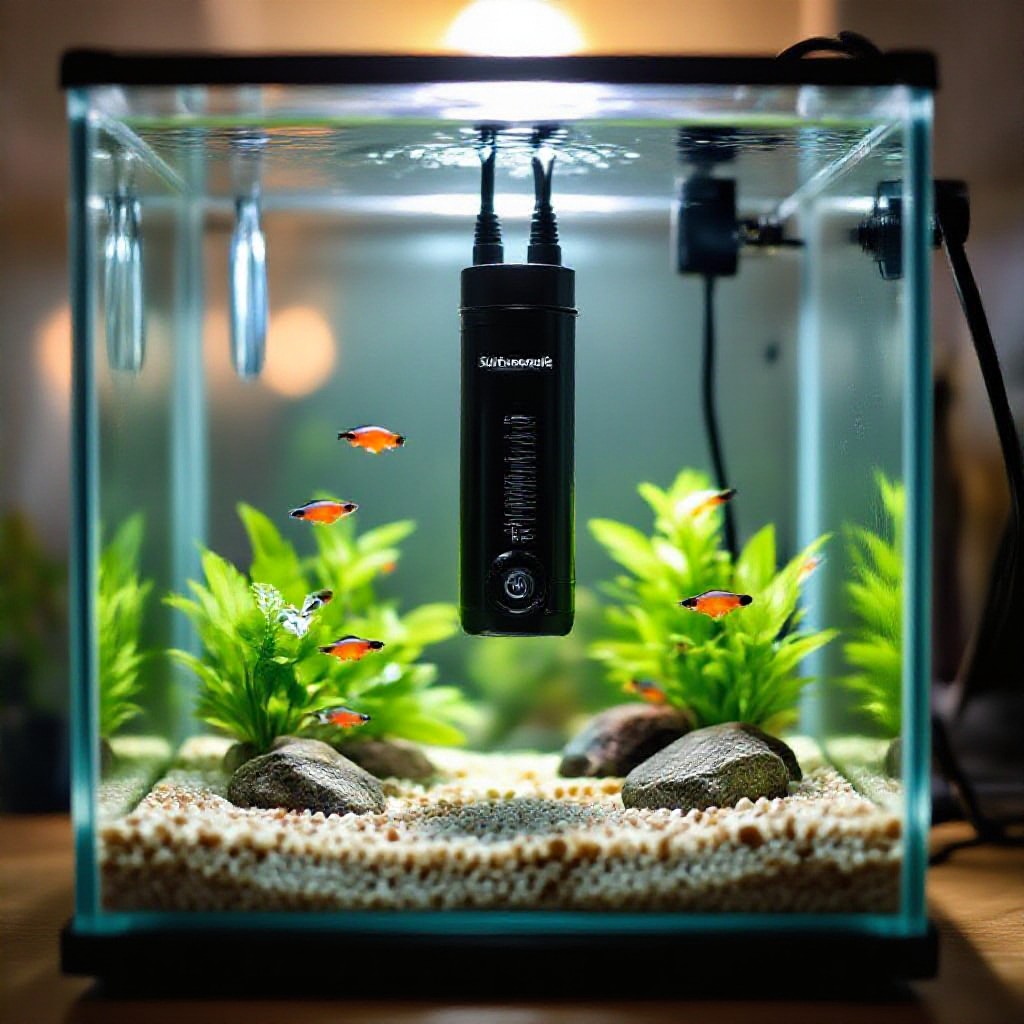
An aquarium air pump for a 10 gallon tank should provide enough air for the connected device without creating stressful current. Tank volume is only the starting point. Water depth, airline length, the number and type of air stones, a sponge filter, check valves, and the fish’s swimming ability all affect the required output.
Choose a pump with a published tank or depth rating that covers the real setup, then use a valve or suitable outlet arrangement to fine-tune the flow. A larger label is not automatically better.
Decide what the pump must run
An air pump does not put oxygen into the water mainly by the bubbles themselves. Its useful effect comes largely from water movement and gas exchange at the surface. First decide whether the pump will run a decorative air stone, a sponge filter, an undergravel filter, or more than one device.
A sponge filter adds resistance and needs enough air to move water through the foam. Two air stones split the available output. A deeper aquarium requires the pump to work against greater water pressure. Check the specifications for both the pump and the connected device.
What to compare on the box or manual
- Recommended aquarium size or maximum water depth.
- Number of outlets and whether the output is adjustable.
- Published air flow, when provided.
- Power consumption and noise-control features.
- Availability of replacement diaphragms or outlet parts.
- Whether the model is designed for continuous aquarium use.
Do not judge solely by wattage. Electrical consumption and air delivery are related to the design, but wattage alone does not tell you how the pump will perform against depth and resistance.
Setup for a 10 gallon aquarium
- Place the pump in a dry, ventilated position above the aquarium water level if the manual allows.
- If it must sit below the water line, install a compatible check valve in the correct direction.
- Create a drip loop in the power cord.
- Cut airline tubing cleanly and avoid long runs, sharp bends, and pinched sections.
- Connect the air stone or sponge filter and start with modest flow.
- Watch surface movement and fish behavior for several hours.
Keep the pump away from splashes and never submerge it unless the device is specifically designed and labeled for that use.
How much bubbling is enough?
Look for steady surface movement rather than a violent rolling current. Fish should be able to rest, feed, and swim normally. Bettas, long-finned fish, fry, and some small species may prefer gentler flow. A heavily stocked or warm aquarium may need more gas exchange, but an air pump cannot compensate for poor stocking, skipped water changes, or an undersized biological filter.
If the pump output is excessive, use a proper air-control valve or bleed valve supported by the setup. Do not tightly clamp the airline in a way that overheats or overloads the pump.
Noise and vibration checks
Set the pump on intact rubber feet on a level shelf. Prevent the housing and tubing from touching surfaces that act like a sounding board. A sudden increase in noise can indicate a loose cover, blocked outlet, worn diaphragm, or unstable placement. Unplug the pump before inspection.
Do you need a battery backup?
A battery-operated or rechargeable backup can be useful where outages are common, but runtime and output vary. Confirm that the backup can drive the actual air stone or sponge filter at the aquarium’s depth, and test it according to the manufacturer schedule before an emergency.
Frequently asked questions
Can one pump run two devices?
Only when the pump has enough output at the real water depth and the air can be balanced safely with a suitable manifold. Splitting one weak outlet can leave both devices underpowered. Check the pump manual and observe each device after adjustment.
Should the air pump run all night?
Many aquarium air systems are designed for continuous use, but follow the exact equipment instructions. Turning aeration off at night can be counterproductive because plants and animals continue to respire. Keep the schedule consistent unless the aquarium design has a documented reason for different operation.
Related aquarium guides
- Sponge aquarium filter guide
- How to choose aquarium filter size
- How often to clean a fish tank filter