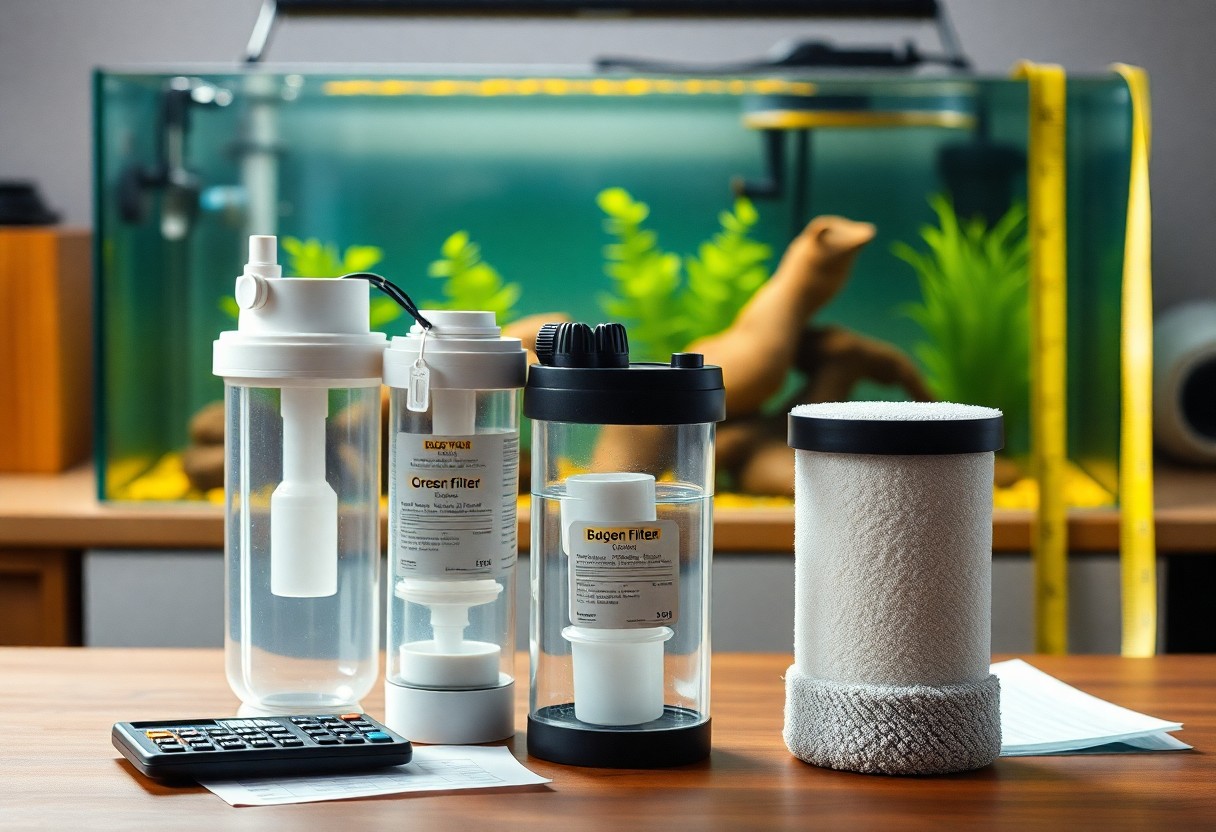
Filtration is one of the most important choices for stable aquarium water. Typical fish tank filter prices vary widely by filter type, tank size, flow rate, media capacity, and brand. Internal filters can work for small tanks, while canister filters often suit larger setups with heavier filtration needs. Match filter capacity to your tank’s bio-load and maintenance routine.
Key Takeaways:
- Fish tank filters vary widely in price, ranging from $10 for basic sponge filters to over $100 for high-capacity canister filters, depending on tank size and filtration needs.
- Hang-on-back (HOB) filters are popular for medium-sized aquariums, typically costing between $20 and $50, offering a balance of performance and ease of maintenance.
- Sponge filters are the most budget-friendly option, often under $15, and ideal for small tanks or breeding setups due to their gentle water flow and biological filtration.
- Canister filters, while more expensive ($70-$150+), are efficient for larger tanks and provide mechanical, chemical, and biological filtration in one system.
- Choosing the right filter depends on your tank size, fish type, and maintenance preferences-always match the filter’s flow rate to your aquarium’s gallon capacity for optimal results.
The Price of the Small Unit
Small aquarium filters typically range from $15 to $40, making them ideal for tanks under 30 gallons. You’ll find reliable options without overspending, but avoid the cheapest models-they often lack proper filtration media or durable motors. Your fish depend on consistent water quality, so invest in a unit that balances cost and performance.
Internal Power Filters
Internal power filters sit inside the tank and are perfect for compact setups. They usually cost between $20 and $35 and offer mechanical and biological filtration. These units are quiet and easy to install, but require regular cleaning to prevent clogs and maintain efficiency in your system.
Hang on Back Models
Hang on back (HOB) filters attach to the rear of your aquarium and start around $25 for basic models. They provide strong water flow and house multiple media types for thorough filtration. Most are simple to maintain and work well in tanks from 10 to 55 gallons, making them a popular choice among beginners and experienced keepers alike.
HOB filters draw water up through an intake tube, pass it through filter media like sponges, carbon, and bio-balls, then return clean water via a spillway. This design promotes oxygen exchange and consistent circulation. Models with adjustable flow rates let you customize output for sensitive species or planted tanks, while larger units often include media baskets for easy upgrades. Choose one rated for at least your tank’s size to ensure optimal performance.
The Debt of the Canister
Canister filters demand a higher price at checkout, often costing several times more than basic models. This upfront investment can feel steep, especially for beginners setting up their first tank.
High Initial Costs
You’ll pay more at the start, with quality canisters ranging from $100 to over $200. The pump, tubing, and media baskets add up quickly, making this the most expensive filtration option available.
Value Over Time
You save money long-term through durability and efficiency. These filters last years with minimal replacements, reducing ongoing costs despite the steep entry price.
Over time, your canister filter proves its worth by requiring fewer part swaps and less frequent maintenance. High-quality models run reliably for a decade or more, filtering larger tanks with ease while lowering electricity and media expenses year after year.
The Honest Sponge
Every beginner should know that a simple sponge filter can be the most reliable and safest choice for small or breeding tanks. It provides mechanical and biological filtration while posing minimal risk to tiny fish and fry. You’ll spend little-often under $15-and gain peace of mind knowing your system stays stable without complex parts.
Simple Air Pumps
An air pump powers your sponge filter silently and efficiently. Most models cost between $10 and $25, and energy-efficient versions run for months without issues. You’ll appreciate how easily it integrates and supports consistent water movement without straining your budget.
Safety for the Fry
Sponge filters don’t suck in newborn fish, making them ideal for breeding setups. The gentle flow protects delicate fry while still cleaning the water. You’ll avoid tragic losses and support natural development with this low-tech solution.
Unlike hang-on-back or canister filters with powerful intakes, sponge filters draw water slowly through a porous medium, drastically reducing the risk of fry being pulled in. Since the entire surface acts as a safe biological filter, you’re also cultivating a healthy microbiome right where fry need it. This dual benefit makes the sponge a top choice for rearing sensitive species.
The Flow of the Water
Water movement affects every inhabitant in your aquarium. Filters create current, and too much flow can stress fish, especially slow swimmers. Matching flow rate to species needs ensures a healthy, natural environment where fish thrive without constant struggle against the current.
Gallons and Hours
Your filter should process the entire tank volume at least 2-3 times per hour. For a 30-gallon tank, that means a filter rated between 60 and 90 GPH. Exceeding this range risks turbulence, while falling short risks poor water quality.
Size of the Tank
Matching filter capacity to tank size prevents under-circulation. A filter too small won’t handle waste buildup, which can contribute to poor water quality and ammonia concerns. Always choose a filter rated for at least your tank’s size-or slightly larger for better performance.
Choosing the right filter starts with your tank’s actual water volume, not just its listed size. Evaporation and substrate reduce usable space, so a 55-gallon tank may hold closer to 50 gallons. Overestimating usable volume can lead to under-filtration, while a properly sized filter maintains clarity and stability. Always check manufacturer ratings and consider bioload-more fish mean higher demand on your system.
The Hidden Monthly Toll
Every filter adds ongoing costs you might overlook. While the initial price seems manageable, monthly expenses from replacements and electricity can surprise you. You’re not just buying a device-you’re committing to its upkeep. Over time, these small charges accumulate, turning an affordable setup into a costly habit if ignored.
The Trap of Cartridges
Cartridges seem convenient, but they’re often overpriced and wasteful. You end up replacing entire units instead of cleaning reusable media. Some brands lock you into proprietary designs, forcing repeat purchases. This cycle inflates your spending and creates unnecessary waste-something you can avoid with smarter filter choices.
The Cost of Power
Electricity use varies widely between models. A small sponge filter sips energy, while oversized canisters run up your bill month after month. Even if a filter seems efficient on paper, continuous 24/7 operation means small wattage adds up. Choosing low-wattage, properly sized units protects your wallet over time.
Power consumption is more than just a number on the spec sheet-it’s a long-term financial commitment. A filter drawing just 10 watts more than another can cost over $15 extra per year in electricity, and that gap widens with higher energy rates. Always check the actual wattage and consider how many hours it runs daily. Efficient models deliver strong performance without draining your budget.
Conclusion
With these considerations, you can confidently choose a fish tank filter that fits your budget and aquarium needs. Your filter impacts water quality and fish health directly, so balance cost with performance. Whether you opt for a hang-on, internal, or canister model, your decision shapes the long-term success of your aquatic environment.
FAQ
Q: How much do fish tank filters typically cost?
A: Fish tank filters range from $20 for basic sponge or hang-on-back models to over $150 for high-end canister filters. Entry-level filters for small tanks (up to 20 gallons) usually cost between $20 and $50. Mid-range options for 20-55 gallon tanks fall between $50 and $100. Large or heavily stocked aquariums often require canister filters, which start around $100 and can exceed $200 depending on brand and features.
Q: What types of aquarium filters are available and how do they differ in price?
A: The main types are sponge, hang-on-back (HOB), internal, canister, and sump filters. Sponge filters are the most affordable, usually under $30, and work well for small or breeding tanks. HOB filters cost $25-$80 and suit most beginner setups. Internal filters, placed inside the tank, range from $20-$60. Canister filters, ideal for larger tanks, cost $100-$250. Sump filters are custom-built and often used in advanced systems, with prices varying widely based on complexity.
Q: Do more expensive filters always perform better?
A: Not necessarily. A higher price often reflects build quality, flow rate, and extra features like multi-stage filtration or quiet operation. For a standard 30-gallon community tank, a $50 HOB filter may perform just as well as a $120 canister unit. The best filter matches your tank size, fish load, and maintenance routine. Over-filtering a small tank is unnecessary and can stress certain fish species.
Q: How often do I need to replace or maintain filter components?
A: Mechanical filter media like sponges or floss should be rinsed every 2-4 weeks and replaced every 3-6 months. Biological media, such as ceramic rings, last 1-2 years but should only be cleaned in old tank water to preserve beneficial bacteria. Carbon media needs replacement every 3-4 weeks. Canister filters may require seal lubrication and impeller cleaning every 6 months. Regular maintenance prevents clogs and keeps water quality stable.
Q: Can I save money by using DIY or homemade filters?
A: Some hobbyists build filters using sponge, air pumps, and plastic containers, which can cost under $15. These work well for small tanks or quarantine setups. However, DIY filters lack the reliability and flow control of commercial models. They also take up more space and may not handle heavy bioloads. For long-term use, a quality store-bought filter often saves time and reduces risk to fish health.
Q: Are filter prices affected by brand reputation?
A: Yes. Brands like Fluval, Eheim, and AquaClear command higher prices due to durability, customer support, and consistent performance. A Fluval H+ for a 40-gallon tank might cost $90, while a generic HOB filter for the same size could be $40. The pricier models often have better motors, quieter operation, and modular media trays. Budget brands can work fine for simple setups but may need replacing sooner.
Q: How do I choose the right filter for my tank size and fish type?
A: Start by matching the filter’s flow rate to your tank’s volume-aim for a turnover of 4-5 times per hour. A 30-gallon tank needs a filter rated for at least 120 gallons per hour. Delicate fish like bettas prefer low flow, so a sponge or adjustable HOB filter works best. Active or messy fish like goldfish produce more waste and need strong mechanical and biological filtration-canister or HOB filters are ideal. Planted tanks benefit from gentle flow and minimal surface disturbance, so internal or sponge filters are often preferred.
Related aquarium guides
- Aquarium Gear Advice hub
- How often to clean a fish tank filter
- When to change fish tank filter cartridges
- Fish tank water change guide
Read next: Once you choose a filter, learn how to arrange its media in Aquarium Filter Media Order: A Beginner-Friendly Setup Guide.